
The intersection of peptide science and aging biology has become one of the most active research areas in the longevity field. Several peptide compounds have been extensively studied for their effects on cellular processes associated with aging — including collagen production, gene expression regulation, mitochondrial function, and tissue regeneration.
This article provides a research-focused overview of the four most studied anti-aging peptides available to the research community.
GHK-Cu: The Gene Expression Modulator
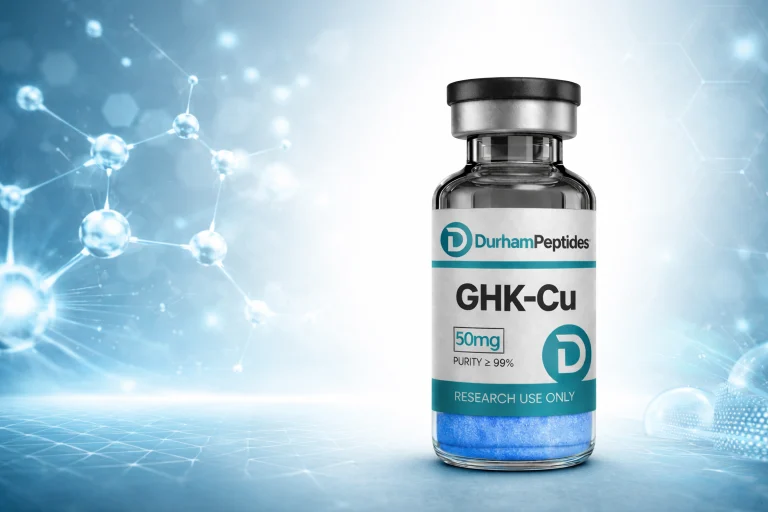
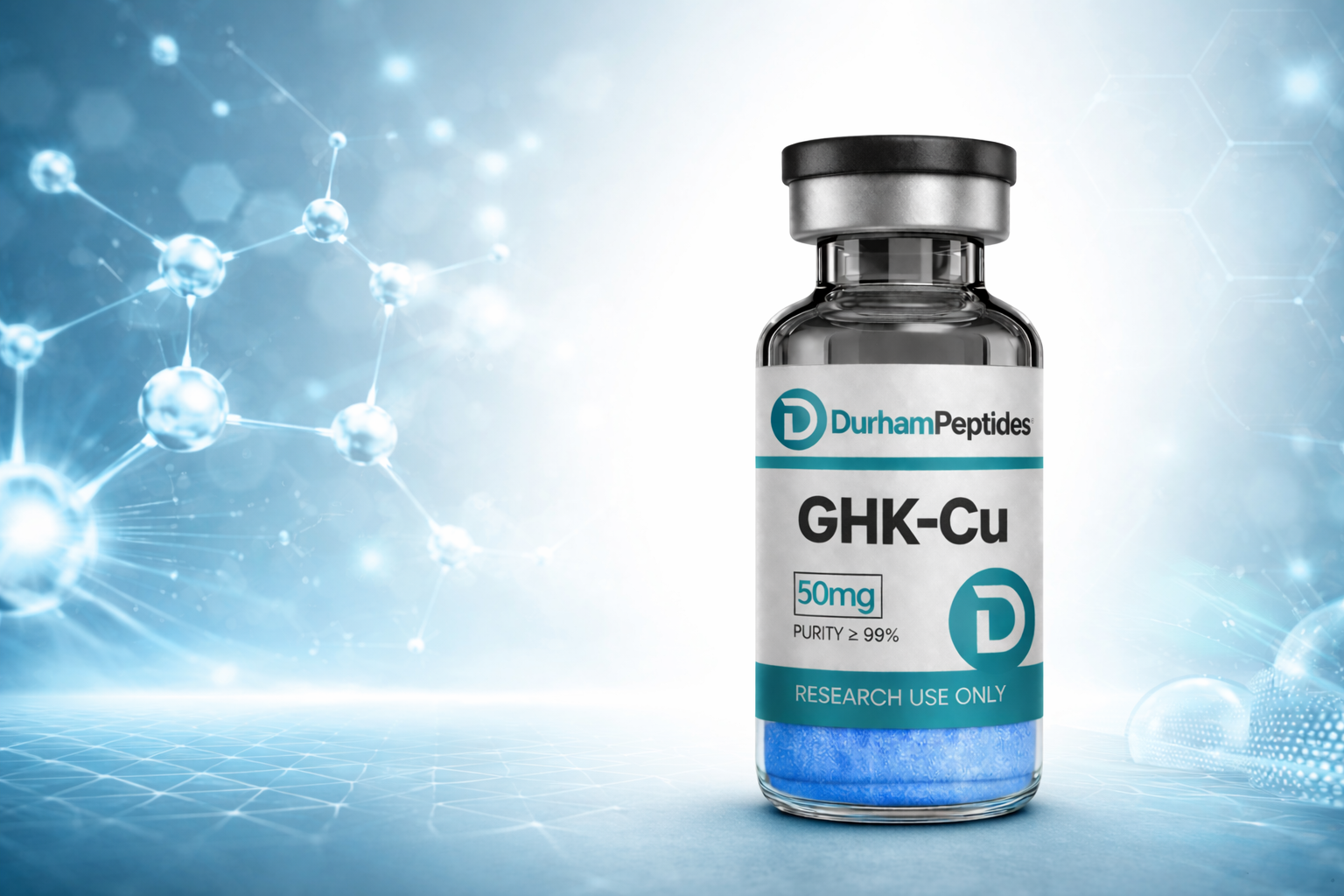
GHK-Cu (glycyl-L-histidyl-L-lysine copper) is arguably the most extensively studied peptide in the anti-aging space, with over 100 published studies spanning five decades.
What makes GHK-Cu particularly interesting to aging researchers is its influence on gene expression. Analysis using the Broad Institute's Connectivity Map revealed that GHK-Cu can influence the expression of over 4,000 human genes — approximately 6% of the human genome. Many of these genes are involved in processes directly relevant to aging, including collagen synthesis and extracellular matrix remodeling, antioxidant enzyme production (SOD, catalase), DNA repair mechanisms, and anti-inflammatory signaling.
Plasma levels of GHK-Cu decline with age — from approximately 200 ng/mL in young adults to approximately 80 ng/mL by age 60. This age-related decline is a central focus of GHK-Cu research, as it suggests that diminished GHK-Cu levels may contribute to the visible and functional signs of aging.
Published research has explored GHK-Cu's effects on stimulating collagen types I and III production, improving skin elasticity and thickness, accelerating wound healing and reducing scar tissue, and upregulating antioxidant defenses.
For researchers interested in GHK-Cu as part of a multi-peptide approach, Durham Peptides also carries the GLOW Blend, which combines GHK-Cu with BPC-157 and TB-500.
BPC-157: The Tissue Repair Peptide
While BPC-157 is most commonly associated with musculoskeletal recovery research, its studied mechanisms have significant relevance to aging biology.
Angiogenesis — the formation of new blood vessels — declines with age and is associated with impaired wound healing and tissue regeneration in older organisms. BPC-157 has been extensively studied for its pro-angiogenic properties in preclinical models.
Additionally, BPC-157 has been explored for its effects on growth factor expression, nitric oxide modulation, and inflammatory signaling — all processes that change with age and contribute to the aging phenotype.
The combination of tissue repair, anti-inflammatory, and pro-angiogenic mechanisms has made BPC-157 a compound of interest to researchers studying age-related decline in tissue regeneration capacity.
TB-500: The Cellular Migration Peptide
TB-500 (Thymosin Beta-4) is studied primarily for its role in actin regulation and cellular migration. In the context of aging research, these mechanisms are relevant because the ability of cells to migrate to sites of damage and initiate repair diminishes with age.
Published research has explored TB-500's effects on promoting endothelial cell differentiation, accelerating wound closure in dermal models, modulating inflammatory responses, and supporting cardiac tissue remodeling.
The decline in endogenous Thymosin Beta-4 levels with age is an area of active investigation, paralleling the age-related decline observed in GHK-Cu.
MOTS-c: The Mitochondrial Longevity Peptide
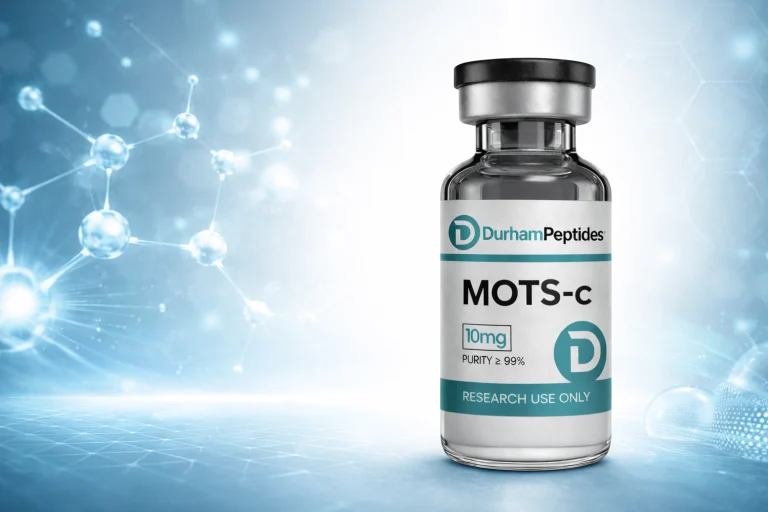
MOTS-c approaches aging from an entirely different angle — mitochondrial function. As a mitochondrial-derived peptide encoded within mitochondrial DNA, MOTS-c is fundamentally different from the other compounds discussed here.
Mitochondrial dysfunction is considered one of the hallmarks of aging. As organisms age, mitochondrial function declines, leading to reduced energy production, increased oxidative stress, and impaired metabolic regulation. MOTS-c has been studied for its ability to activate AMPK — the cell's master metabolic switch — and improve glucose uptake and energy metabolism.
The original 2015 discovery paper demonstrated that MOTS-c levels decline with age, and that exogenous MOTS-c administration was associated with improved metabolic function in aging preclinical models.
The Multi-Peptide Approach
Researchers increasingly study these compounds not in isolation but in combination, based on the premise that different peptides addressing different aging mechanisms may produce complementary effects.
GHK-Cu addresses gene expression and collagen, BPC-157 addresses tissue repair and vascularization, TB-500 addresses cellular migration and wound recovery, and MOTS-c addresses mitochondrial function and metabolism.
Durham Peptides carries all four compounds individually, as well as the GLOW Blend (GHK-Cu + BPC-157 + TB-500) and the Wolverine Stack (BPC-157 + TB-500) for researchers interested in combined formulations.
All products require reconstitution with bacteriostatic water.
Selected Research References
- Pickart L, Vasquez-Soltero JM, Margolina A. "GHK Peptide as a Natural Modulator of Multiple Cellular Pathways in Skin Regeneration." Biomed Res Int. 2015. PMID: 26236730
- Lee C, et al. "The mitochondrial-derived peptide MOTS-c promotes metabolic homeostasis." Cell Metab. 2015. PMID: 25738459
- Gwyer D, et al. "BPC 157 and musculoskeletal soft tissue healing." Cell Tissue Res. 2019. PMID: 30915550
All products mentioned in this article are sold by Durham Peptides for research and laboratory use only. They are not intended for human or animal consumption, diagnosis, treatment, cure, or prevention of any disease.