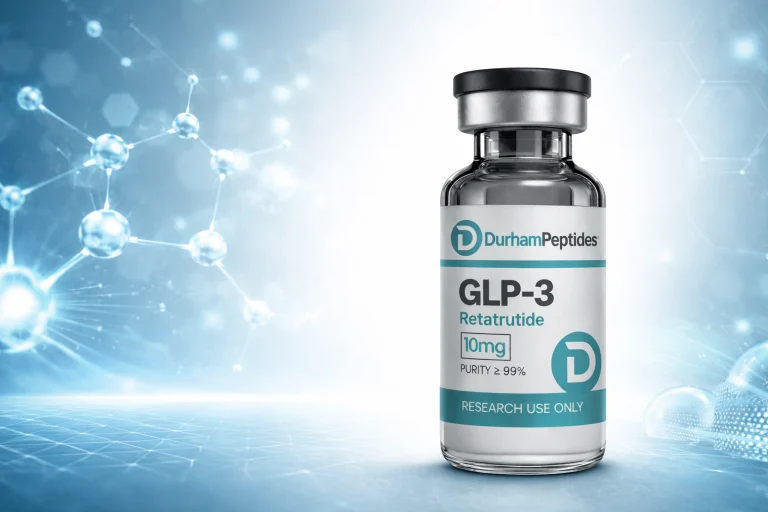


Canada has quietly become one of the most active markets for peptide research in North America. From university laboratories studying tissue repair mechanisms to clinical trial programs investigating metabolic peptides, the scope of peptide science in Canada continues to expand. This article provides an overview of the key compounds driving research interest and why peptide science has gained so much momentum.
Why Peptides Are a Growing Area of Scientific Interest
Peptides occupy a unique space in biomedical research. They are larger than traditional small-molecule drugs but smaller than full proteins, giving them a combination of specificity and versatility that makes them attractive research tools.
Unlike small molecules, which often interact with multiple biological targets and can produce broad effects, peptides tend to interact with specific receptors or pathways. This specificity is one reason why peptide-based research has grown so rapidly — researchers can study targeted biological mechanisms with greater precision.
The global peptide therapeutics market has grown substantially over the past decade, driven by advances in synthesis technology, increased understanding of peptide biology, and high-profile clinical trial results for compounds like GLP-1 receptor agonists.
GLP-1 and Incretin Peptides: The Metabolic Research Wave
The most visible area of peptide research in 2026 involves the incretin class — peptides that mimic or enhance gut hormones involved in metabolic regulation. Three compounds in particular have generated enormous research interest.
Semaglutide is a GLP-1 receptor agonist that has been studied in some of the largest clinical trial programs in modern pharmaceutical history. Published data from the STEP and SUSTAIN trial programs have made it one of the most cited peptide compounds in recent medical literature.
Tirzepatide advanced the field further as a dual GIP/GLP-1 agonist. The SURPASS and SURMOUNT clinical trial programs demonstrated that engaging two receptors simultaneously produced enhanced metabolic effects compared to mono-agonist approaches, opening new avenues for multi-target peptide research.
Retatrutide represents the latest frontier — a triple agonist engaging GLP-1, GIP, and glucagon receptors. Phase 2 data published in the New England Journal of Medicine in 2023 generated significant research interest, and Phase 3 trials are ongoing. The addition of glucagon receptor agonism introduces thermogenic and energy expenditure pathways not engaged by previous compounds.
Tissue Repair and Recovery Peptides
Beyond metabolic research, a significant body of published preclinical work focuses on peptides studied for tissue repair mechanisms.
BPC-157 (Body Protection Compound-157) remains one of the most published peptides in the tissue repair space. A 2019 review in Cell and Tissue Research examined the existing literature and noted positive outcomes across all injury types studied in preclinical models, including tendon, ligament, muscle, and gastrointestinal tissue. The majority of published data is from animal models, and the compound continues to generate research interest for its studied effects on angiogenesis and inflammatory signaling.
TB-500 (Thymosin Beta-4) is studied for a complementary set of mechanisms — primarily actin regulation and cellular migration. Published research has examined its effects on wound closure, cardiac tissue remodeling, and anti-inflammatory cytokine modulation.
The combination of BPC-157 and TB-500 — commonly known as the Wolverine Stack — has become one of the most discussed peptide combinations in the research community, based on the premise that their individually studied mechanisms may be complementary.
Anti-Aging and Skin Biology Research
Peptide research in the anti-aging space has been driven primarily by GHK-Cu (copper peptide), which has been the subject of over 100 published studies. Research interest centers on its influence on gene expression — analysis using the Broad Institute's Connectivity Map revealed effects on over 4,000 human genes involved in collagen synthesis, antioxidant enzyme production, and DNA repair.
The observation that endogenous GHK-Cu levels decline significantly with age — from approximately 200 ng/mL in young adults to approximately 80 ng/mL by age 60 — has made it a focal point for researchers studying the molecular mechanisms of aging.
Durham Peptides carries GHK-Cu both individually and as part of the GLOW Blend, which combines GHK-Cu with BPC-157 and TB-500 for multi-peptide research protocols.
Mitochondrial Peptide Research
A newer area of peptide science involves compounds encoded within mitochondrial DNA rather than nuclear DNA. MOTS-c (Mitochondrial Open Reading Frame of the 12S rRNA Type-C) was first characterized in 2015 and has since generated research interest for its studied effects on AMPK activation, glucose metabolism, and exercise-related signaling pathways.
The discovery that MOTS-c levels decline with age, paralleling the decline in mitochondrial function that is considered a hallmark of aging, has positioned it as a compound of interest in longevity research.
The Role of Third-Party Testing in Canadian Research
As the Canadian peptide research market has grown, so have quality standards. Independent third-party testing through laboratories like Janoshik Analytical has become the expected standard among serious researchers and suppliers. This testing provides HPLC purity verification, mass spectrometry identity confirmation, and publicly verifiable COA keys that allow independent quality checks.
Durham Peptides maintains Janoshik-verified testing on all products. For more information, see our Lab Results page or our guide: How to Verify a Janoshik Certificate of Analysis.
Looking Ahead
Peptide research continues to accelerate globally, with Canada playing an increasingly active role. Ongoing Phase 3 clinical trials for compounds like retatrutide, growing published literature on tissue repair and anti-aging peptides, and advances in peptide synthesis technology all point toward continued expansion of the field.
For researchers looking to explore the full range of available compounds, Durham Peptides carries a complete catalog of research peptides with same-day shipping across Canada. Browse all products at durhampeptides.ca.
All peptides require reconstitution with bacteriostatic water before use in research settings.
Selected Research References
- Gwyer D, et al. "BPC 157 and musculoskeletal soft tissue healing." Cell Tissue Res. 2019. PMID: 30915550
- Pickart L, et al. "GHK Peptide as a Natural Modulator of Multiple Cellular Pathways in Skin Regeneration." Biomed Res Int. 2015. PMID: 26236730
- Lee C, et al. "The mitochondrial-derived peptide MOTS-c promotes metabolic homeostasis." Cell Metab. 2015. PMID: 25738459
- Jastreboff AM, et al. "Triple-Hormone-Receptor Agonist Retatrutide for Obesity." NEJM. 2023. PMID: 37366315
All products mentioned in this article are sold by Durham Peptides for research and laboratory use only. They are not intended for human or animal consumption, diagnosis, treatment, cure, or prevention of any disease.