
The recovery peptide category is the most active segment of the Canadian peptide research market. Led by BPC-157 and TB-500 — both individually and as the combined Wolverine Stack — these compounds have generated more search interest, more published research, and more community discussion than any other peptide category.
This article provides a consolidated research overview of all three products and how they relate to each other.
BPC-157: The Gastric Peptide
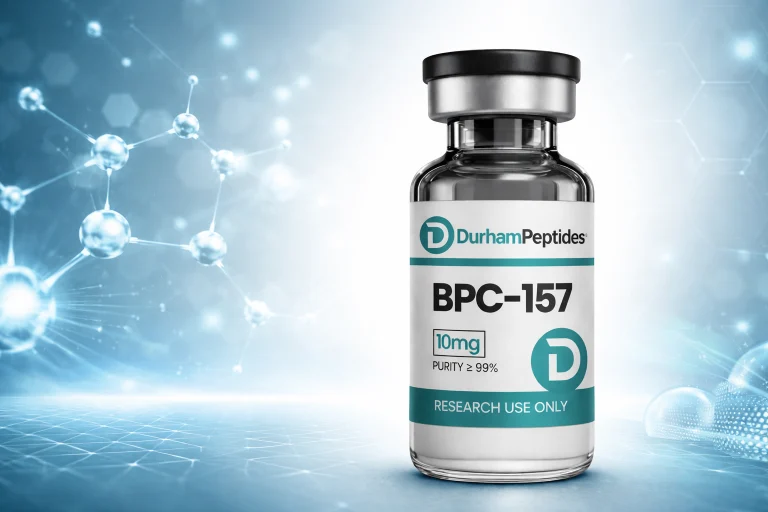
BPC-157 (Body Protection Compound-157) is a synthetic 15-amino-acid peptide derived from a protective protein found in human gastric juice. It has been the subject of hundreds of published preclinical studies examining its effects across multiple tissue types.
Key research areas include tendon, ligament, and muscle repair — BPC-157 has been studied in multiple preclinical models of connective tissue injury, with published results showing accelerated recovery timelines compared to controls. Gastric and intestinal protection is another major research area — as a gastric-derived peptide, BPC-157 has been extensively explored for protective effects on the gastrointestinal lining. Angiogenesis research has examined BPC-157's studied ability to promote the formation of new blood vessels, which is a critical component of tissue repair. Anti-inflammatory mechanisms have been explored through multiple signaling pathways, including nitric oxide modulation and growth factor expression.
BPC-157 has a molecular weight of 1419.53 g/mol and a CAS number of 137525-51-0.
TB-500: The Thymosin Peptide
TB-500 is a synthetic version of Thymosin Beta-4, a 43-amino-acid peptide found in virtually all human and animal cells. Its research profile is distinct from but complementary to BPC-157.
TB-500's primary studied mechanism is actin regulation. Actin is a structural protein that plays a central role in cell movement and organization. By sequestering G-actin, TB-500 has been studied for its ability to promote cellular migration to sites of injury — a fundamental step in the repair process. Wound healing research has demonstrated accelerated wound closure in preclinical dermal models. A foundational 1999 study by Malinda et al. showed increased re-epithelialization of 42-61% over controls in a rat wound model. Anti-inflammatory properties have been explored through modulation of inflammatory cytokines. Cardiac research has examined TB-500's effects on heart tissue repair and remodeling following injury.
TB-500 has a molecular weight of approximately 4963.44 g/mol and a CAS number of 77591-33-4.
The Wolverine Stack: Combined Approach
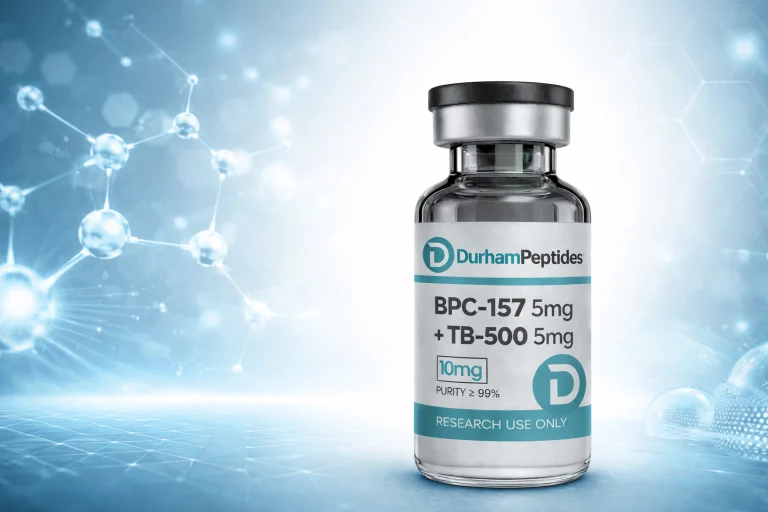
The Wolverine Stack combines BPC-157 (5mg) and TB-500 (5mg) in a single 10mg vial. The name originated in online fitness and recovery communities as a reference to the Marvel character's regenerative abilities, and has since become the standard industry term for this combination.
The rationale for combining these two peptides is mechanistic complementarity. BPC-157's studied strengths center on vascularization, growth factor signaling, and tissue protection. TB-500's studied strengths center on structural protein regulation, cellular migration, and wound closure. Together, they address repair from two different biological angles.
The Wolverine Stack has become one of the most discussed peptide combinations in Canada. Durham Peptides carries the pre-blended version for single-vial convenience, as well as both individual compounds for researchers who prefer to control ratios.
How They Compare
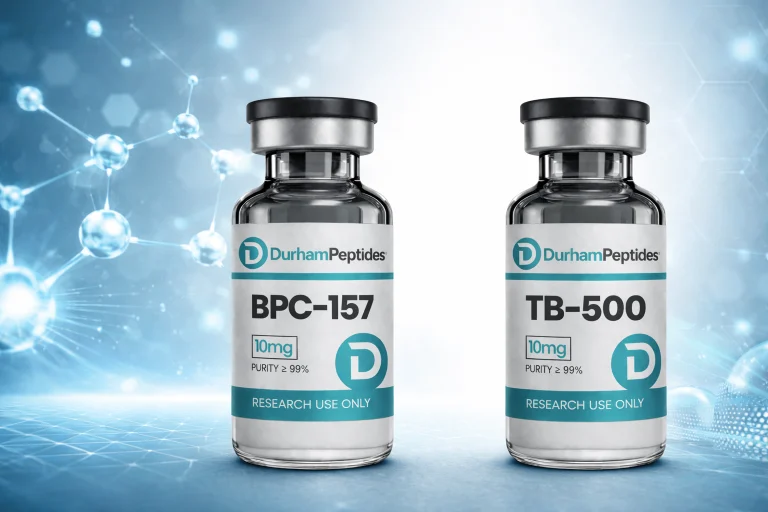
BPC-157 and TB-500 are not interchangeable — they have different amino acid sequences, different molecular weights, different origins, and different primary studied mechanisms. Viewing them as alternatives to each other misses the point of why they're combined.
BPC-157 is a 15-amino-acid gastric peptide focused on vascularization and protective mechanisms. TB-500 is a 43-amino-acid thymus peptide focused on cellular migration and structural repair. The Wolverine Stack combines both in a fixed 1:1 ratio.
For a deeper dive into the Wolverine Stack specifically, see our article: The Wolverine Stack Explained: BPC-157 + TB-500.
For a side-by-side comparison of the two individual compounds, see: BPC-157 vs TB-500.
Quality and Sourcing
All recovery peptides from Durham Peptides are independently tested by Janoshik Analytical with verifiable COAs. All are 100% synthetically manufactured with no animal derivatives. All require reconstitution with bacteriostatic water before use in research settings.
Selected Research References
- Gwyer D, et al. "BPC 157 and musculoskeletal soft tissue healing." Cell Tissue Res. 2019. PMID: 30915550
- Seiwerth S, et al. "BPC 157 and Wound Healing." Front Pharmacol. 2021. PMID: 34267654
- Malinda KM, et al. "Thymosin beta4 accelerates wound healing." J Invest Dermatol. 1999. PMID: 10469335
- Goldstein AL, et al. "Thymosin β4: a multi-functional regenerative peptide." Expert Opin Biol Ther. 2012. PMID: 22074294
All products mentioned in this article are sold by Durham Peptides for research and laboratory use only. They are not intended for human or animal consumption, diagnosis, treatment, cure, or prevention of any disease.