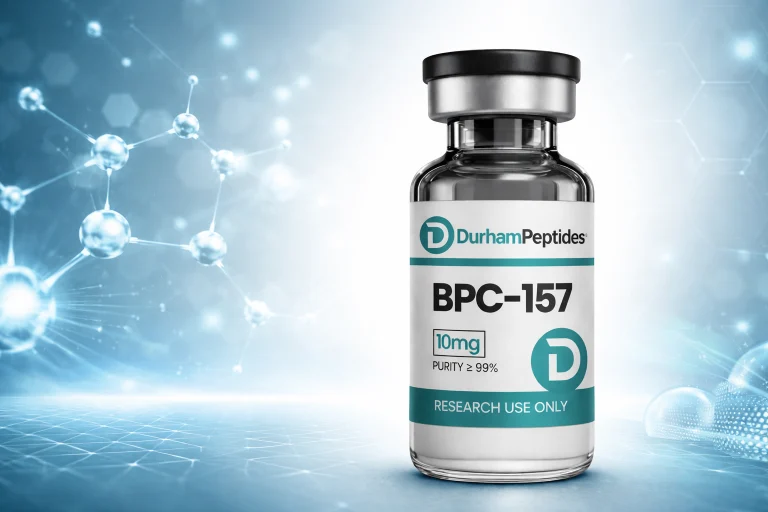

BPC-157, also known as Body Protection Compound-157, is a synthetic 15-amino-acid peptide derived from a naturally occurring protective protein found in human gastric juice. Since its initial characterization in the 1990s, BPC-157 has become one of the most widely discussed peptides in the world — and arguably the single most popular research peptide in Canada.
The compound's rise in public awareness is closely tied to mentions on major platforms. Podcast host Joe Rogan has discussed BPC-157 multiple times on The Joe Rogan Experience, often in the context of injury recovery conversations with guests. Neuroscientist Andrew Huberman has also referenced the peptide in discussions about tissue repair biology. These mainstream mentions, combined with growing interest from fitness and biohacking communities, have driven BPC-157 to the top of peptide search queries in Canada and globally.
What Makes BPC-157 Unique?
Unlike many peptides that are derived from external sources, BPC-157 is derived from a protein that the human body naturally produces in gastric juice. It is a pentadecapeptide, meaning it consists of exactly 15 amino acids in the sequence: Gly-Glu-Pro-Pro-Pro-Gly-Lys-Pro-Ala-Asp-Asp-Ala-Gly-Leu-Val.
What makes BPC-157 unusual in the peptide world is its stability. Most peptides degrade rapidly in the presence of stomach acid, but BPC-157 has demonstrated remarkable stability in human gastric juice — a property that is directly related to its gastric origin. This stability has been noted across multiple published studies and is one reason researchers find it particularly interesting compared to other bioactive peptides.
What Has Been Studied?
BPC-157 has been the subject of hundreds of published studies, primarily in preclinical (animal) models. The research spans a wide range of tissue types and biological systems. Key areas of investigation include tissue repair in tendon, ligament, and muscle models, protective effects on gastric and intestinal lining, promotion of angiogenesis (new blood vessel formation), anti-inflammatory signaling cascades, and neuroprotective pathways.
A 2019 review published in Cell and Tissue Research examined the existing literature and noted that all studies investigating BPC-157 had demonstrated positive healing effects across various injury types. However, the authors also emphasized that the majority of studies were conducted in small rodent models, and human clinical data remains limited.
More recently, a 2021 review in Frontiers in Pharmacology provided a comprehensive overview of BPC-157's wound healing properties across skin, tendon, ligament, muscle, bone, nerve, and blood vessel models.
It is important to note that BPC-157 has not been approved by Health Canada, the FDA, or any regulatory body for therapeutic use in humans. All research findings to date are from preclinical studies.
The Wolverine Stack Connection
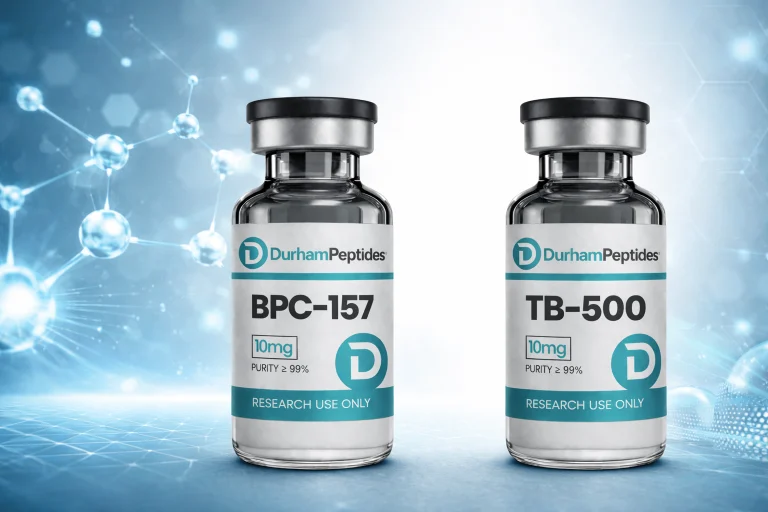
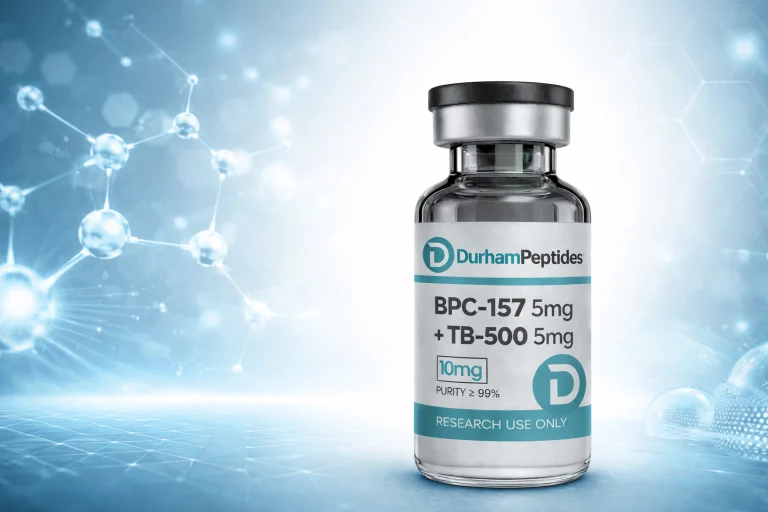
One of the most searched peptide terms in Canada is "Wolverine Stack" — a combination of BPC-157 and TB-500 (Thymosin Beta-4). The name originates from online fitness communities referencing the Marvel character Wolverine and his regenerative abilities. The combination of these two peptides in a single vial has become widely popular, with researchers interested in studying potential synergistic effects between the two compounds.
Durham Peptides carries BPC-157 individually (10mg), TB-500 individually (10mg), and the pre-blended Wolverine Stack (BPC-157 5mg + TB-500 5mg) for research convenience.
How to Verify Peptide Quality
One of the most important considerations when sourcing any research peptide is purity verification. The standard in the peptide research community is third-party analytical testing, with Janoshik Analytical being the most widely recognized independent testing laboratory.
A legitimate Certificate of Analysis (COA) from Janoshik will include HPLC purity percentage, mass spectrometry identity confirmation, and a unique verification key that can be independently checked on Janoshik's website. Durham Peptides provides Janoshik-verified COAs for every product, and every COA key is independently verifiable.
When evaluating any peptide supplier, always ask for a COA and verify it independently — never rely on a supplier's word alone.
Key Specifications
BPC-157 from Durham Peptides is supplied as a lyophilized (freeze-dried) powder at 10mg per vial. It requires reconstitution with bacteriostatic water before use in research settings. The compound has a molecular weight of 1419.53 g/mol and a CAS number of 137525-51-0.
Selected Research References
- Gwyer D, Wragg NM, Wilson SL. "Gastric pentadecapeptide body protection compound BPC 157 and its role in accelerating musculoskeletal soft tissue healing." Cell Tissue Res. 2019. PMID: 30915550
- Seiwerth S, et al. "Stable Gastric Pentadecapeptide BPC 157 and Wound Healing." Front Pharmacol. 2021. PMID: 34267654
- Sikiric P, et al. "Stable gastric pentadecapeptide BPC 157: novel therapy in gastrointestinal tract." Curr Pharm Des. 2011. PMID: 21548867
All products mentioned in this article are sold by Durham Peptides for research and laboratory use only. They are not intended for human or animal consumption, diagnosis, treatment, cure, or prevention of any disease.