

peptide research skin health GHK-Cu KPV BPC-157 Durham Peptides Canada
Skin biology research is one of the largest and most active categories in modern peptide science, with multiple compounds studied for their effects on collagen synthesis, skin remodeling, anti-inflammatory mechanisms in skin tissue, wound healing, and various dermatological research applications. For Canadian researchers entering skin-focused peptide research, three compounds dominate the published literature: GHK-Cu, KPV, and BPC-157. Each engages different aspects of skin biology, and combination formulations like the GLOW and KLOW Blends bring these mechanisms together in single research formulations.
This article provides a research-focused overview of peptide research in skin biology — the specific mechanisms each compound engages, how the research literature has developed, and how the combination formulations address multi-mechanism skin research questions.
For broader anti-aging coverage, see Anti-Aging Peptides: What the Research Says About GHK-Cu, BPC-157, TB-500, and MOTS-c.
The Skin Biology Research Landscape
Skin is the body's largest organ and one of the most complex from a biological research perspective. The skin biology research landscape addresses multiple interconnected research areas:
Collagen synthesis and turnover. Collagen production declines with aging and is influenced by various peptide signaling pathways. Research into compounds that modulate collagen synthesis is one of the largest skin biology research categories.
Skin remodeling. Beyond simple collagen production, skin biology research examines tissue remodeling — the broader process of skin renewal, repair, and reorganization at the cellular level.
Wound healing. Tissue repair in skin contexts shares mechanisms with broader tissue repair research, with skin-specific aspects related to keratinocyte biology, fibroblast function, and dermal/epidermal interactions.
Inflammation in skin. Many skin conditions involve inflammatory components. Research into anti-inflammatory peptides has direct skin biology relevance.
Photoaging and oxidative stress. UV exposure and oxidative stress influence skin biology in distinct ways. Research compounds with antioxidant or photoprotective effects appear in skin biology literature.
Hair follicle biology. Adjacent to but distinct from skin tissue per se, hair follicle research uses similar peptide research methodologies and overlaps with broader skin biology.
GHK-Cu: The Anchor of Skin Biology Peptide Research
GHK-Cu is the most extensively studied peptide in skin biology research. With over 100 published studies spanning five decades, the published research base on GHK-Cu in skin contexts is unmatched in the peptide research field.
Research mechanism in skin contexts: Published research has investigated GHK-Cu's effects on:
- Collagen synthesis. Multiple studies have documented GHK-Cu's effects on collagen production by fibroblasts.
- Gene expression effects on skin-related genes. Microarray research has identified hundreds of genes modulated by GHK-Cu, with substantial subsets relevant to skin biology.
- Tissue remodeling. Research has examined GHK-Cu's effects on extracellular matrix components beyond collagen.
- Antioxidant effects. GHK-Cu has been studied for antioxidant activity in various tissue contexts, including skin.
- Wound healing in skin models. Multiple studies have examined GHK-Cu's effects in wound healing models.
- Hair follicle research. Some published research has investigated GHK-Cu's effects on hair follicle biology.
The breadth of skin-related research mechanisms, combined with the substantial publication record, makes GHK-Cu the central compound in peptide skin biology research. For complete coverage, see GHK-Cu: The Anti-Aging Copper Peptide with Over 100 Published Studies and Copper Peptides Explained.
KPV: Anti-Inflammatory Mechanism in Skin Contexts
KPV — the anti-inflammatory tripeptide derived from α-melanocyte-stimulating hormone — has substantial published research relevance in skin biology contexts.
Research mechanism in skin contexts: Published research has investigated:
- Anti-inflammatory effects in skin models. KPV has been studied for effects on inflammatory pathways relevant to dermatological research questions.
- NF-κB pathway modulation in skin cells. The general anti-inflammatory mechanism applies in skin tissue contexts.
- α-MSH origins relevance. Since KPV is derived from α-MSH (which has direct skin biology research history through its melanocortin receptor activity), there's overlapping context — though KPV's anti-inflammatory effects appear to operate independently of melanocortin receptors.
- Combination with skin-relevant peptides. KPV's inclusion in the KLOW Blend reflects its complementary anti-inflammatory mechanism alongside other skin-relevant peptides.
KPV's relevance to skin biology research is more focused than GHK-Cu's — primarily through the anti-inflammatory mechanism — but distinct enough to warrant separate consideration in skin-focused research protocols. For complete coverage, see What Is KPV? The Anti-Inflammatory Tripeptide in the KLOW Blend.
BPC-157: Tissue Repair and Angiogenesis in Skin Research
BPC-157 is primarily characterized in research literature for tissue repair and angiogenic effects. The skin-specific applications come from these broader mechanisms applied to skin tissue contexts.
Research mechanism in skin contexts: Published research has investigated:
- Wound healing. BPC-157 has been studied in wound healing models including skin-specific contexts.
- Angiogenic effects. New blood vessel formation supports tissue repair in skin contexts the same way it supports tissue repair in other tissues.
- Growth factor expression. BPC-157's effects on growth factor signaling have implications for skin biology research.
- Tissue protection. General tissue protective mechanisms apply in skin tissue contexts.
BPC-157's skin biology research relevance is somewhat indirect — the primary research mechanisms aren't skin-specific, but they apply to skin tissue along with other tissues. For complete coverage, see What Is BPC-157? Why It's Canada's Most Popular Research Peptide.
Combination Formulations for Skin Biology Research
The skin biology research relevance of multiple compounds is reflected in the multi-peptide combination formulations:
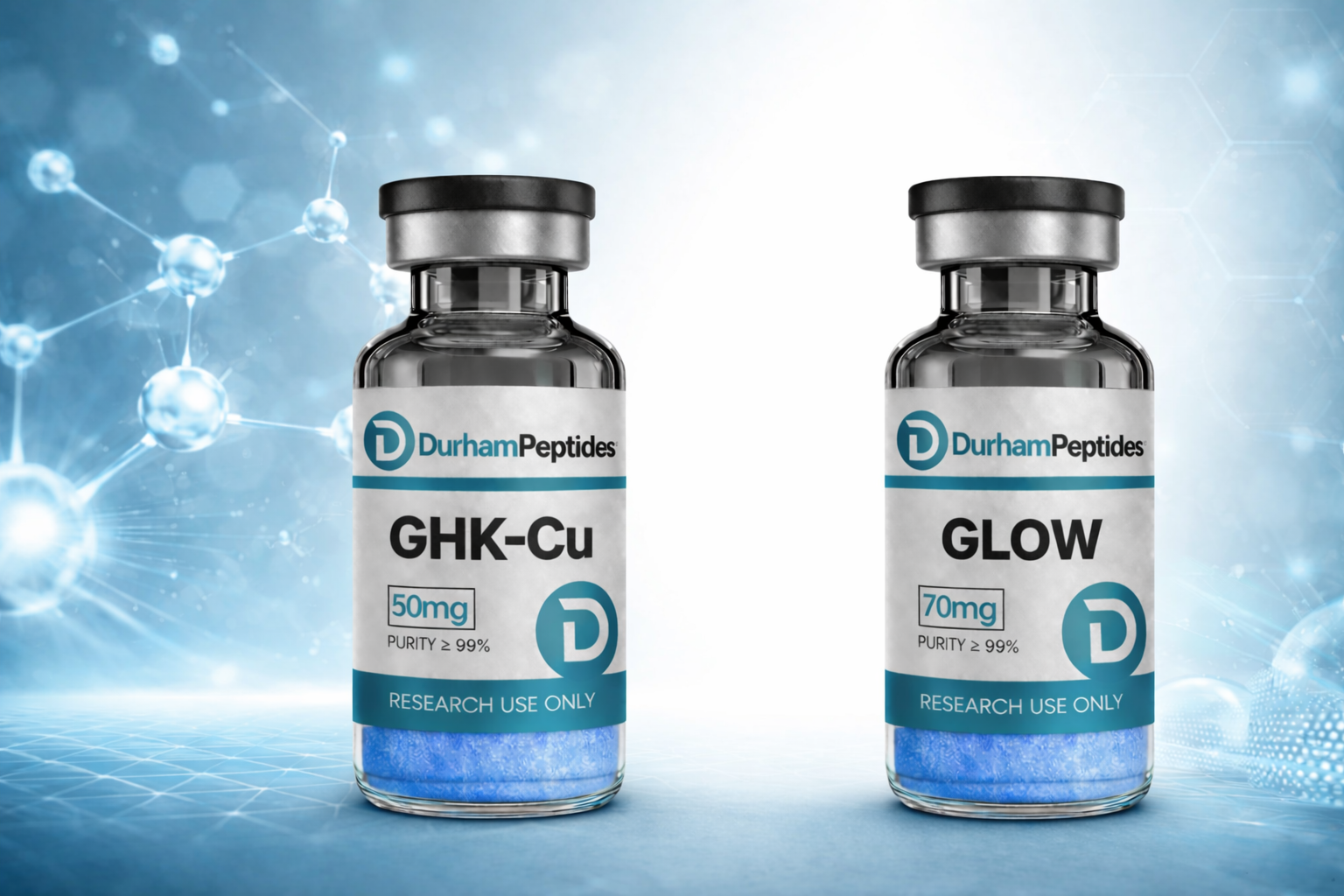
GLOW Blend (70mg total). Three peptides — GHK-Cu (50mg), BPC-157 (10mg), and TB-500 (10mg). Engages gene expression (GHK-Cu), angiogenesis (BPC-157), and cell migration (TB-500) pathways simultaneously. Skin biology research relevance through GHK-Cu's substantial skin research base plus BPC-157 and TB-500's tissue repair mechanisms. See GLOW Blend Composition: Why GHK-Cu + BPC-157 + TB-500 Work Together.
KLOW Blend (80mg total). Four peptides — adding KPV's anti-inflammatory mechanism to the GLOW formulation. The most comprehensive multi-mechanism skin research formulation in the catalog. Engages gene expression (GHK-Cu), angiogenesis (BPC-157), cell migration (TB-500), and anti-inflammatory (KPV) pathways simultaneously. See Buy KLOW Blend in Canada: The Complete Four-Peptide Buyer's Guide.
For broader combination logic, see Peptide Stacking Guide: The Science Behind Combination Research Protocols.
Decision Framework: Which Compound for Which Skin Biology Research Question
A practical framework for matching compounds to research questions:
For collagen synthesis-focused research: GHK-Cu individually. The compound with the largest published research base on collagen-related effects.
For broad skin gene expression research: GHK-Cu individually. The substantial microarray research base addresses gene expression questions.
For inflammation-focused skin research: KPV in the KLOW Blend. The combination formulation includes KPV's anti-inflammatory mechanism alongside other skin-relevant peptides.
For wound healing in skin contexts: BPC-157 individually, the Wolverine Stack, or combination formulations (GLOW, KLOW) — depending on whether single or multi-mechanism research is the focus.
For comprehensive multi-mechanism skin research: GLOW Blend (three pathways) or KLOW Blend (four pathways including anti-inflammatory).
Other Compounds with Skin Biology Relevance
Beyond the three primary compounds, the broader peptide research landscape includes other skin-relevant compounds:
TB-500 (Thymosin Beta-4 fragment). Cell migration mechanisms relevant to skin tissue repair. Available individually as TB-500 10mg or in the GLOW/KLOW combination formulations.
MOTS-c. Mitochondrial-derived peptide with broader cellular biology research applications. Less directly skin-focused but mitochondrial function has implications for skin aging research. See What Is MOTS-c?.
α-MSH and related melanocortin peptides. The parent peptide of KPV with direct skin pigmentation biology. See What Is PT-141? A Research Overview of Bremelanotide and the Melanocortin Peptide Class for related melanocortin coverage (PT-141 itself has different research applications, but the broader melanocortin category has skin biology relevance).
Quality Verification for Skin Biology Research
The standard research peptide quality framework applies identically across all skin biology research compounds:
- Janoshik third-party testing for verifiable Certificate of Analysis. See How to Verify Peptide Quality: COAs, Third-Party Testing & What to Look For.
- ≥99% HPLC purity. See Peptide Purity: Why 99% Matters.
- Mass spectrometry identity confirmation.
- Solid-Phase Peptide Synthesis manufacturing with synthetic amino acids.
For Durham Peptides skin-relevant peptide products, all COAs are at durhampeptides.ca/lab-results.
Frequently Asked Questions
What's the best peptide for skin research? "Best" depends on the research question. GHK-Cu has the largest published research base in skin biology. KPV addresses anti-inflammatory aspects. BPC-157 addresses tissue repair and angiogenesis. Combinations like GLOW and KLOW Blends engage multiple skin-relevant mechanisms simultaneously.
Why is GHK-Cu so prominent in skin research? GHK-Cu has been studied since the 1970s with over 100 published studies. The research base spans collagen synthesis, gene expression, tissue remodeling, wound healing, and various skin-specific contexts — making it the most thoroughly characterized peptide in skin biology research.
Are these compounds approved for therapeutic skin use? None of the compounds covered above is approved by Health Canada for therapeutic skin use as research peptides. They operate under research-use-only framing for laboratory and research applications. See Are Peptides Legal in Canada?.
Can I combine multiple skin-relevant peptides? Yes — the GLOW and KLOW Blends specifically combine multiple skin-relevant peptides. The combination formulations engage complementary mechanisms simultaneously. See Peptide Stacking Guide.
Does Durham Peptides sell standalone KPV? KPV is currently available in the KLOW Blend formulation. Standalone KPV availability depends on customer research demand and inventory expansion.
What's the difference between skin biology and anti-aging peptide research? Skin biology research focuses specifically on skin tissue mechanisms — collagen, dermal/epidermal biology, skin-specific responses. Anti-aging research more broadly addresses aging-related changes that include skin but extend to other tissues and broader aging biology.
Are there topical vs systemic skin peptide research differences? Some peptides have been studied in topical formulations alongside systemic applications. The research literature varies by compound. For research peptide formulations sold by Durham Peptides, the standard research peptide framework applies regardless of intended research administration approach.
Which compound has the most skin-specific research? GHK-Cu has the most comprehensive skin biology research base. KPV's anti-inflammatory research has substantial skin-relevant applications. BPC-157's skin biology research is part of its broader tissue repair literature.
Can these peptides be used in cosmetic formulations? Cosmetic formulation development is a different regulatory category from research peptide work. Research peptides are sold under research-use-only framing for laboratory and research applications, not for inclusion in cosmetic products marketed to consumers.
What about hair follicle research? GHK-Cu has substantial published research in hair follicle biology contexts. The mechanisms overlap with broader skin biology research but address specific hair follicle research questions.
Are these compounds vegan? Yes — all compounds covered above are manufactured via Solid-Phase Peptide Synthesis with synthetic amino acids. No animal-derived materials. See Vegan Peptides.
How does the Durham Peptides catalog support skin biology research? The catalog includes GHK-Cu individually, BPC-157 individually, TB-500 individually, GLOW Blend (three skin-relevant peptides), and KLOW Blend (four skin-relevant peptides including KPV). All with Janoshik third-party testing.
Final Thoughts
Skin biology peptide research in 2026 is anchored by three compounds with distinct but complementary mechanisms — GHK-Cu's gene expression and collagen effects, KPV's anti-inflammatory mechanism, and BPC-157's tissue repair and angiogenic mechanisms. The combination formulations (GLOW, KLOW) bring these mechanisms together for multi-pathway research, while individual peptides remain appropriate for mechanism-focused research questions.
For Canadian researchers entering skin biology peptide research:
- GHK-Cu has the largest published research base and central position in the field
- KPV addresses the anti-inflammatory aspect that's relevant for many skin research questions
- BPC-157 addresses tissue repair and angiogenesis in skin contexts
- Combination formulations (GLOW, KLOW) engage multiple mechanisms simultaneously
- Quality verification through Janoshik third-party testing applies identically across all compounds
For continued reading, see GHK-Cu: The Anti-Aging Copper Peptide, What Is KPV?, GLOW Blend Composition, KLOW Blend Buyer's Guide, Anti-Aging Peptides Research, and Anti-Inflammatory Peptides Research Overview.
Browse the complete Durham Peptides catalog at durhampeptides.ca/category/all-products. View all Janoshik-verified COAs at durhampeptides.ca/lab-results.
Selected References
- Pickart L, Margolina A. Regenerative and Protective Actions of the GHK-Cu Peptide in the Light of the New Gene Data. International Journal of Molecular Sciences. 2018;19(7):1987. https://pubmed.ncbi.nlm.nih.gov/29986520/
- Pickart L, Vasquez-Soltero JM, Margolina A. The Human Tripeptide GHK and Tissue Remodeling. Journal of Biomaterials Science, Polymer Edition. 2008;19(8):969-988. https://pubmed.ncbi.nlm.nih.gov/18644225/
- Brzoska T, Luger TA, Maaser C, Abels C, Böhm M. α-Melanocyte-Stimulating Hormone and Related Tripeptides: Biochemistry, Antiinflammatory and Protective Effects. Endocrine Reviews. 2008;29(5):581-602. https://pubmed.ncbi.nlm.nih.gov/18612139/
- Sikiric P, Seiwerth S, Rucman R, et al. Stable Gastric Pentadecapeptide BPC 157: Novel Therapy in Gastrointestinal Tract. Current Pharmaceutical Design. 2011;17(16):1612-1632. https://pubmed.ncbi.nlm.nih.gov/21548867/
- Hiltz ME, Lipton JM. Antiinflammatory Activity of a COOH-Terminal Fragment of the Neuropeptide α-MSH. FASEB Journal. 1990;4(13):3095-3099. https://pubmed.ncbi.nlm.nih.gov/2120207/
- Goldstein AL, Hannappel E, Sosne G, Kleinman HK. Thymosin β4: A Multi-Functional Regenerative Peptide. Expert Opinion on Biological Therapy. 2012;12(1):37-51. https://pubmed.ncbi.nlm.nih.gov/22142325/
All products sold by Durham Peptides are for research and laboratory use only. They are not intended for human or animal consumption, diagnosis, treatment, cure, or prevention of any disease. This article is informational and does not constitute medical advice.