
If BPC-157 is the most recognized name in Canadian peptide research, TB-500 is its closest counterpart — and the two are almost never discussed separately for long. TB-500 is one half of the widely searched "Wolverine Stack," and it has earned a dedicated following in research communities for its distinct mechanism of action and broad scope of published preclinical data.
This article covers what TB-500 is, how it works at the molecular level, what researchers have studied it for, and why it is so frequently paired with BPC-157.
What Is TB-500?
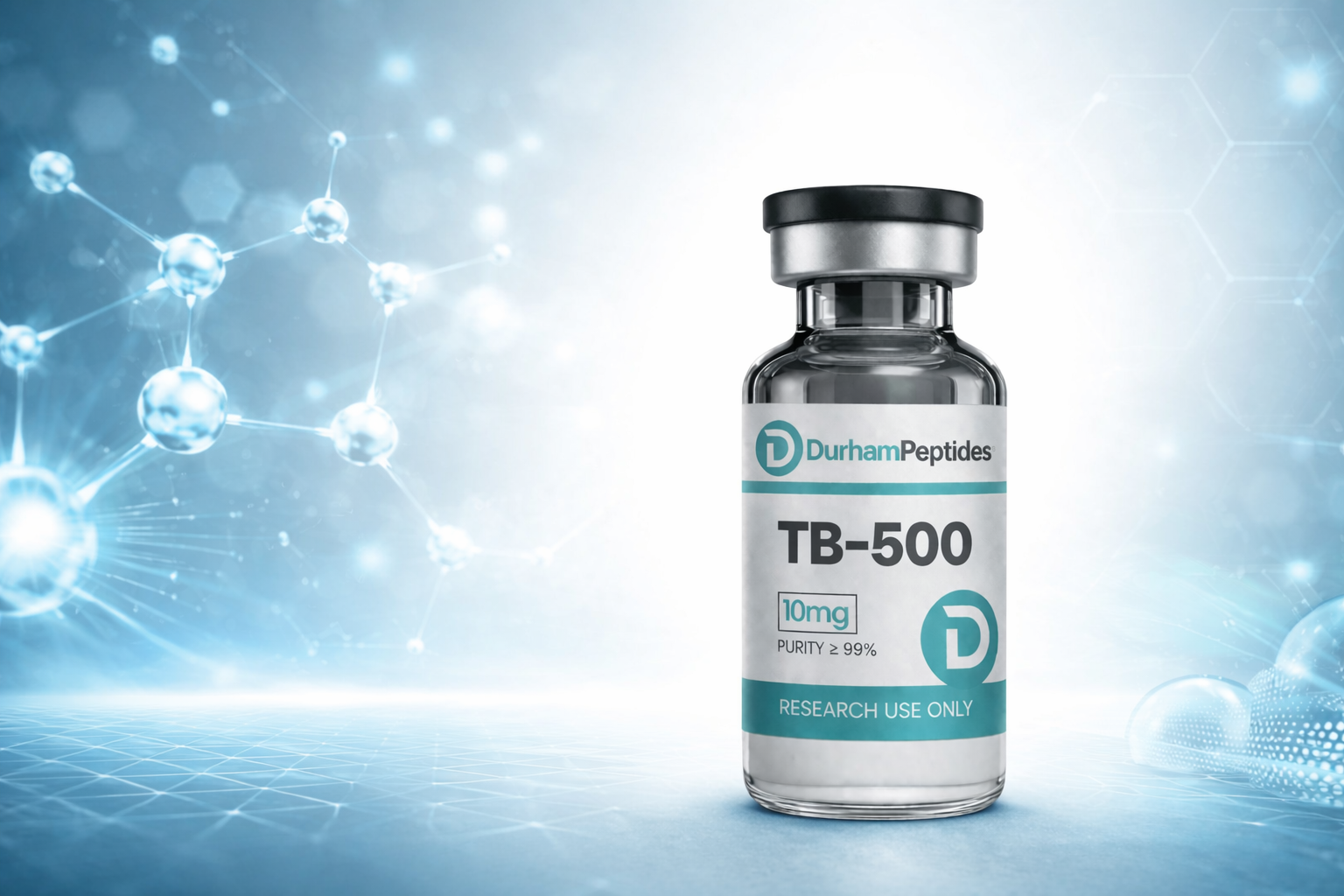
TB-500 is a synthetic peptide fragment derived from Thymosin Beta-4 (Tβ4), a 43-amino-acid protein that is naturally expressed in nearly all human and animal cells. Thymosin Beta-4 was first identified in the thymus gland in the 1960s and has since been found in high concentrations in wound fluid, blood platelets, and tissues undergoing active repair.
The synthetic fragment TB-500 replicates the active region of Thymosin Beta-4 responsible for its biological activity, specifically the actin-binding domain. This makes TB-500 a focused research tool for studying the mechanisms by which Tβ4 influences tissue repair and cellular migration.
How TB-500 Works: Actin Polymerization
The primary mechanism of action studied in TB-500 research is its interaction with actin, one of the most abundant proteins in eukaryotic cells. Actin forms the structural framework of the cytoskeleton — the internal scaffolding that gives cells their shape and enables movement.
TB-500 promotes the sequestration of G-actin (globular actin monomers), which facilitates the reorganization of the actin cytoskeleton. This process is directly linked to cell migration, a critical step in wound healing and tissue repair. When cells need to move toward a site of injury, they must rapidly reorganize their internal structure — and TB-500 is studied for its role in enabling this process.
Beyond actin regulation, TB-500 has also been investigated for its potential effects on reducing inflammatory markers and promoting the formation of new blood vessels (angiogenesis).
What Has Been Studied?
Published research on Thymosin Beta-4 and TB-500 spans several areas:
Wound healing and skin repair — Tβ4 has been studied for its effects on keratinocyte and endothelial cell migration, which are essential steps in closing wounds and regenerating skin tissue.
Cardiac tissue — Research has explored Tβ4's potential role in promoting survival of cardiomyocytes and reducing fibrosis following cardiac injury in animal models.
Corneal repair — Thymosin Beta-4 has been investigated as a potential therapeutic agent for corneal wound healing, with studies examining its effects on epithelial cell migration and reduction of inflammation.
Hair follicle growth — Preclinical research has suggested Tβ4 may stimulate hair follicle stem cells, though this research remains in early stages.
Inflammatory modulation — Studies have examined Tβ4's ability to modulate inflammatory cytokines, particularly in the context of tissue injury and repair.
How TB-500 Differs from BPC-157
While both peptides are studied in the context of tissue repair, their mechanisms are fundamentally different:
BPC-157 is a 15-amino-acid peptide derived from gastric juice proteins. Its studied mechanisms involve angiogenesis, fibroblast migration, collagen synthesis, nitric oxide modulation, and gastrointestinal protection. It operates primarily through growth factor upregulation and vascular repair pathways.
TB-500 is a 43-amino-acid peptide fragment derived from Thymosin Beta-4. Its primary studied mechanism involves actin polymerization and cytoskeletal reorganization, directly facilitating cell migration. It is also studied for anti-inflammatory and angiogenic properties.
In simple terms, BPC-157 is studied for signaling cells to begin repair, while TB-500 is studied for enabling cells to physically move to the repair site. This is why researchers frequently examine them together. For a full head-to-head comparison, see our article BPC-157 vs TB-500: Which Recovery Peptide Do Researchers Prefer?
Why TB-500 and BPC-157 Are Stacked
The combination of TB-500 and BPC-157 — commonly known as the Wolverine Stack — is one of the most searched peptide terms in Canada. The rationale behind the combination is the potentially complementary nature of their mechanisms: BPC-157's signaling and growth factor activity paired with TB-500's cell migration and structural repair activity.
Durham Peptides offers both TB-500 as a standalone product and as part of the pre-blended Wolverine Stack. For more on the Wolverine Stack, see our detailed guide: The Wolverine Stack Explained: BPC-157 + TB-500.
Product Specifications
Form: Lyophilized powder Net weight: 10mg per vial Purity: 99%+ (HPLC verified) Testing: Third-party verified by Janoshik Analytical Storage: 2–8°C, protect from light and moisture Full lab results are available on our Lab Results page.
Selected Research References
- Malinda KM, et al. "Thymosin beta4 accelerates wound healing." J Invest Dermatol. 1999. PMID: 10735859
- Bock-Marquette I, et al. "Thymosin beta4 activates integrin-linked kinase and promotes cardiac cell migration, survival and cardiac repair." Nature. 2004. PMID: 15383276
- Sosne G, et al. "Thymosin beta 4 promotes corneal wound healing and decreases inflammation in vivo following alkali injury." Exp Eye Res. 2002. PMID: 11591859
- Philp D, et al. "Thymosin beta4 promotes angiogenesis, wound healing, and hair follicle development." Mech Ageing Dev. 2004. PMID: 14973180
- Sosne G, Ousler GW. "Thymosin beta 4 ophthalmic solution for dry eye: a randomized, placebo-controlled, Phase II clinical trial." Ophthalmic Res. 2015. PMID: 20471432
All products mentioned in this article are sold by Durham Peptides for research and laboratory use only. They are not intended for human or animal consumption, diagnosis, treatment, cure, or prevention of any disease.