How Long Does Bacteriostatic Water Last After Opening? Refrigeration and Shelf Life Guide
- Durham Peptides

- 2 days ago
- 7 min read

Bacteriostatic water shelf life after opening refrigeration Durham Peptides Canada
One of the most-asked questions among Canadian researchers is how long bacteriostatic water actually lasts once the seal is broken. The answer matters because every peptide reconstitution depends on bacteriostatic water that's still effectively bacteriostatic — and once the preservative starts to lose effectiveness, microbial contamination becomes a real concern for any subsequent reconstitution.
This article addresses the shelf-life-after-opening question directly: what the 28-day rule actually means, whether refrigeration is required, what happens past the recommended window, and how shelf life affects peptide reconstitution practices.
For broader bacteriostatic water coverage, see What Is Bacteriostatic Water? Why Every Peptide Requires It and the foundational Bacteriostatic Water FAQ.
The Short Answer
After opening, a vial of bacteriostatic water is generally considered usable for approximately 28 days under refrigerated storage. Beyond that window, the bacteriostatic preservative (0.9% benzyl alcohol) effectiveness decreases and microbial contamination risk increases enough that the vial should be discarded.
This 28-day rule is the standard across pharmaceutical and research peptide work and matches the typical reconstituted peptide shelf life — meaning a single bacteriostatic water vial is usually finished around the same time as the peptides reconstituted with it.
Does Bacteriostatic Water Need to Be Refrigerated?
The answer depends on whether the vial is opened or unopened.
Unopened bacteriostatic water vials. Storage at room temperature is acceptable. The sterile, sealed environment plus the bacteriostatic preservative keeps the contents stable. Many suppliers ship bacteriostatic water at ambient temperature for this reason.
Opened bacteriostatic water vials. Refrigerated storage (2-8°C) is recommended after the seal is broken. Refrigeration:
Slows any potential microbial growth that might overcome the bacteriostatic preservative
Reduces the rate of preservative degradation over time
Maintains a more consistent storage environment
Aligns with the storage requirements of the reconstituted peptides the water is being used for
The standard practice for Canadian research peptide work: keep unopened vials at room temperature, move them to the refrigerator after first use, use within 28 days.
Why the 28-Day Rule
The 28-day rule isn't arbitrary — it reflects the practical effectiveness window of the 0.9% benzyl alcohol bacteriostatic preservative.
During the first 28 days post-opening:
Benzyl alcohol concentration remains effective at preventing bacterial growth
The preservative provides reliable protection against typical environmental microbial exposure during normal vial access
Any microbial contamination introduced during typical research handling is suppressed
Past 28 days post-opening:
Benzyl alcohol effectiveness decreases through evaporation, oxidation, and other chemical changes
The preservative's ability to suppress new microbial introductions decreases
Risk of contamination compromising subsequent reconstitutions increases
The 28-day window also aligns conveniently with the typical reconstituted peptide shelf life — a researcher who reconstitutes a peptide on the same day they open a fresh bacteriostatic water vial will typically finish both at roughly the same time.
For complete peptide storage context, see Peptide Storage & Shelf Life: How to Store BPC-157, Tirzepatide, and Other Research Peptides.
What Happens If You Use Bacteriostatic Water Past 28 Days?
The honest answer: it might be fine, or it might not. The 28-day rule is a practical safety margin, not an exact threshold where the water suddenly becomes contaminated. But the risk of contamination increases past that window in ways that aren't always visible:
Microbial contamination may not produce visible cloudiness in early stages
Reconstituting peptides with compromised bacteriostatic water can introduce contamination into the reconstituted peptide vial
Contaminated reconstituted peptide vials can affect research interpretation in ways that look like other research artifacts
For research where consistency matters (which is most research), staying within the 28-day window is the conservative approach. The cost of fresh bacteriostatic water is small compared to the cost of contamination affecting research outcomes.
For broader common mistakes including this one, see Common Peptide Research Mistakes: 12 Errors to Avoid in Canadian Research Protocols.
How to Track the 28-Day Window
The simplest practice: write the open date on the vial directly. A piece of tape with the date is sufficient. Some researchers also note the open date in their research notebook or spreadsheet. See How to Build a Peptide Research Protocol.
Without dating the vial, the 28-day window is unknowable, and researchers end up either using past-shelf-life material or discarding still-good material out of caution. Direct date labeling solves the problem in seconds.
Visual Inspection Before Each Use
In addition to the 28-day rule, brief visual inspection before each use catches contamination that might develop within the window:
Clear solution. Bacteriostatic water should be clear with no visible particles
No cloudiness. Even slight cloudiness suggests contamination
No floating debris. Particles floating in the solution indicate contamination or vial integrity issues
No color changes. Color shifts (toward yellow, brown, or other tints) indicate quality concerns
Any visual abnormality is a flag to discard the vial and use a fresh one.
Multi-Use Within the 28-Day Window
The bacteriostatic preservative is what makes multi-use practical. Within the 28-day window, the same vial can be used for:
Multiple peptide reconstitutions (typically 5-15 individual peptide vials over the 28-day window depending on volumes used)
Topping up reconstituted vials if needed
Same researcher using the vial across multiple research sessions
Each access introduces brief environmental exposure, but the bacteriostatic preservative suppresses microbial growth from these typical exposures. The multi-use practical
capability is exactly why bacteriostatic water (not sterile water) is the standard for research peptide work. See Bacteriostatic Water vs Sterile Water vs Saline.
Vial Size and Shelf Life Math
Most Canadian-domestic suppliers including Durham Peptides offer bacteriostatic water in 10mL vials. The 10mL volume typically reconstitutes multiple peptides depending on the concentrations:
10mg peptide reconstituted with 1mL = 10 peptides reconstituted per 10mL vial (if all are 10mg)
10mg peptide reconstituted with 2mL = 5 peptides reconstituted per 10mL vial
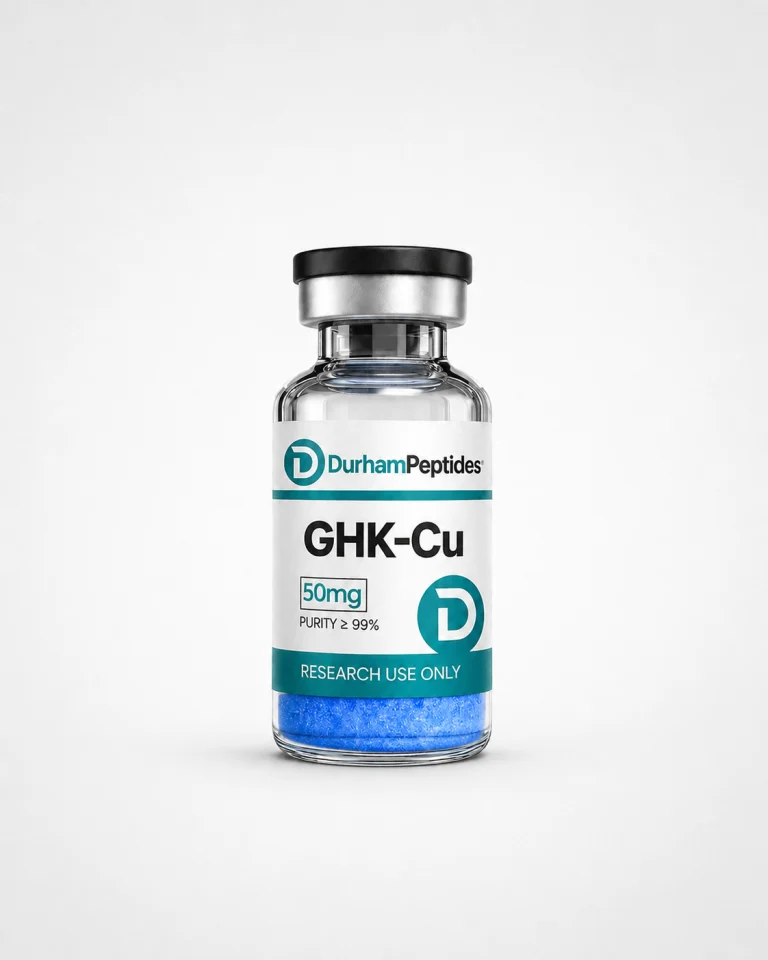
50mg peptide (GHK-Cu) reconstituted with 2.5mL = 4 peptides reconstituted per 10mL vial
For most research timelines, a single 10mL bacteriostatic water vial is consumed within the 28-day window through normal peptide reconstitution. See Peptide Reconstitution Calculator Guide for reconstitution math.
What Affects Shelf Life
Several factors can shorten the practical shelf life:
Storage temperature variations. Refrigerator temperature swings (door storage especially) accelerate preservative degradation. Use the main refrigerator compartment, not the door.
Repeated freeze-thaw exposure. Bacteriostatic water shouldn't be frozen at all. Freezing damages the preservative and changes solution chemistry.
Heat exposure. Brief room-temperature exposure during research sessions is fine. Extended room-temperature storage past 28 days reduces shelf life.
Improper sealing. Vials with damaged septa or rubber stoppers may not maintain the controlled environment that the bacteriostatic preservative depends on.
Contamination during access. Each access should use sterile technique — clean injection sites on the vial septum, sterile syringes, no touching the rubber stopper directly.
Frequently Asked Questions
How long does bacteriostatic water last after opening? Approximately 28 days under refrigerated storage (2-8°C). Past 28 days, the bacteriostatic preservative effectiveness decreases enough that contamination risk becomes meaningful.
Does bacteriostatic water need to be refrigerated after opening? Yes. Refrigerated storage (2-8°C) after opening slows preservative degradation and maintains a consistent storage environment. Unopened vials can be stored at room temperature.
Can I use bacteriostatic water past 28 days? The 28-day rule is a practical safety margin. Past that window, contamination risk increases in ways that aren't always visible. The conservative practice is to discard and use fresh bacteriostatic water.
Does bacteriostatic water expire? Sealed bacteriostatic water has a manufacturer expiration date (typically several years). Once opened, the practical shelf life is approximately 28 days under refrigerated storage regardless of the manufacturer's broader expiration date.
Does bacteriostatic water need to be refrigerated before opening? No. Unopened sealed vials can be stored at room temperature. Refrigeration is recommended only after the seal is broken.
What if my bacteriostatic water vial is older than 28 days but looks fine? "Looks fine" isn't reliable. Microbial contamination doesn't always produce visible signs in early stages. The 28-day rule is the safe practice regardless of visual appearance.
Can I use the same bacteriostatic water vial for multiple peptides? Yes — that's exactly the multi-use capability the bacteriostatic preservative provides. A 10mL vial typically reconstitutes multiple peptides over the 28-day window.
Should I freeze bacteriostatic water for longer storage? No. Freezing damages the preservative chemistry. Refrigerated storage is the correct approach for opened vials.
What if I forget to date the vial? Discard and use fresh. Without knowing the open date, the 28-day window is unknowable. Going forward, label every opened vial with the open date.
How does bacteriostatic water shelf life compare to peptide shelf life? Approximately the same — both are ~28 days post-opening/post-reconstitution under refrigeration. This convenient alignment means a single bacteriostatic water vial typically finishes at roughly the same time as the peptides reconstituted with it.
Where does Durham Peptides bacteriostatic water come from? Durham Peptides Bacteriostatic Water 10mL is sourced for research peptide reconstitution use, with the standard 0.9% benzyl alcohol bacteriostatic preservative. Canadian-domestic shipping eliminates customs uncertainty.
What if my bacteriostatic water arrives slightly cloudy? Cloudiness on arrival is unusual and suggests potential quality or shipping issues. Contact the supplier with documentation. Don't use cloudy bacteriostatic water for reconstitution.
Final Thoughts
The 28-day rule for opened bacteriostatic water is one of those practical research peptide rules that's worth taking seriously. The cost of fresh replacement is small compared to the cost of contaminated reconstitution affecting research outcomes. Date the vial when opened, refrigerate after first use, visual inspect before each access, and discard at 28 days regardless of how much remains.
For Canadian researchers, the practical takeaways:
Approximately 28 days post-opening shelf life under refrigeration
Refrigerate after opening; unopened vials can stay at room temperature
Date the vial directly so the 28-day window is trackable
Visual inspect before each use for cloudiness, particles, or color changes
The 28-day window aligns with typical reconstituted peptide shelf life
For continued reading, see What Is Bacteriostatic Water?, Bacteriostatic Water FAQ, Bacteriostatic Water vs Sterile Water vs Saline, Peptide Storage & Shelf Life, and How to Reconstitute Peptides.
Browse the complete Durham Peptides catalog at durhampeptides.ca/category/all-products. View all Janoshik-verified COAs at durhampeptides.ca/lab-results.
Selected References
United States Pharmacopeia. USP General Chapter <797>: Pharmaceutical Compounding — Sterile Preparations. Standards on sterile handling and bacteriostatic water shelf life.
Manning MC, Chou DK, Murphy BM, Payne RW, Katayama DS. Stability of Protein Pharmaceuticals: An Update. Pharmaceutical Research. 2010;27(4):544-575. https://pubmed.ncbi.nlm.nih.gov/20143256/
Wang W. Lyophilization and Development of Solid Protein Pharmaceuticals. International Journal of Pharmaceutics. 2000;203(1-2):1-60. https://pubmed.ncbi.nlm.nih.gov/10967427/
International Council for Harmonisation. ICH Q1A(R2): Stability Testing of New Drug Substances and Products. Standards on stability testing applicable to bacteriostatic water and reconstituted peptide solutions.
Trissel LA. Handbook on Injectable Drugs. American Society of Health-System Pharmacists. Reference on diluent stability and shelf life.
Health Canada. Drugs and Health Products: Regulatory Information for Drugs. Federal regulatory guidance.
All products sold by Durham Peptides are for research and laboratory use only. They are not intended for human or animal consumption, diagnosis, treatment, cure, or prevention of any disease. This article is informational and does not constitute medical advice.