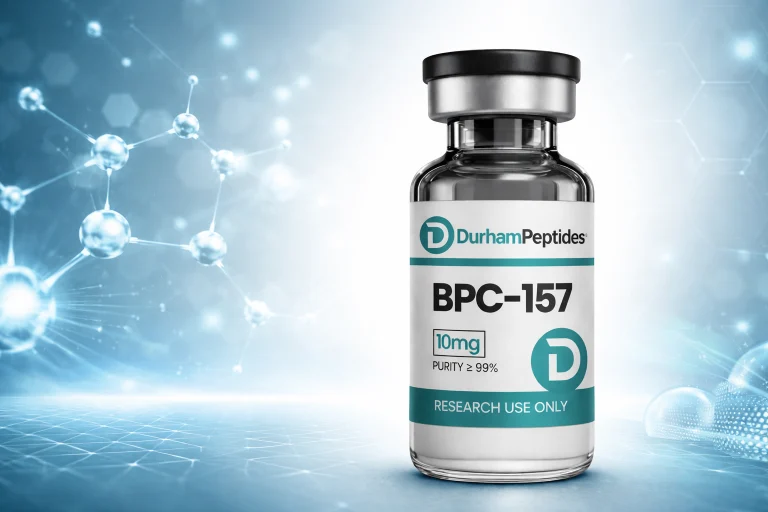

Research peptides are supplied in lyophilized (freeze-dried) form — a stable powder that must be reconstituted with an appropriate solvent before use in laboratory applications. Reconstitution is a straightforward process, but improper technique can damage the peptide and compromise experimental results.
This guide covers the standard laboratory protocol for reconstituting lyophilized peptides with bacteriostatic water.
What Is Reconstitution?
Reconstitution is the process of dissolving a lyophilized compound back into solution. Lyophilization removes water from the peptide under vacuum, leaving behind a dry powder or cake that is stable for long-term storage. When the researcher is ready to use the peptide, they add a measured volume of solvent to return it to liquid form.
What You Need
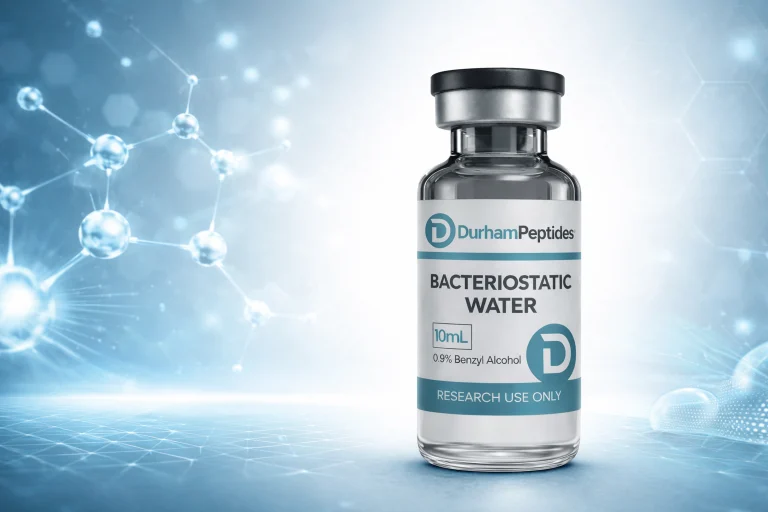
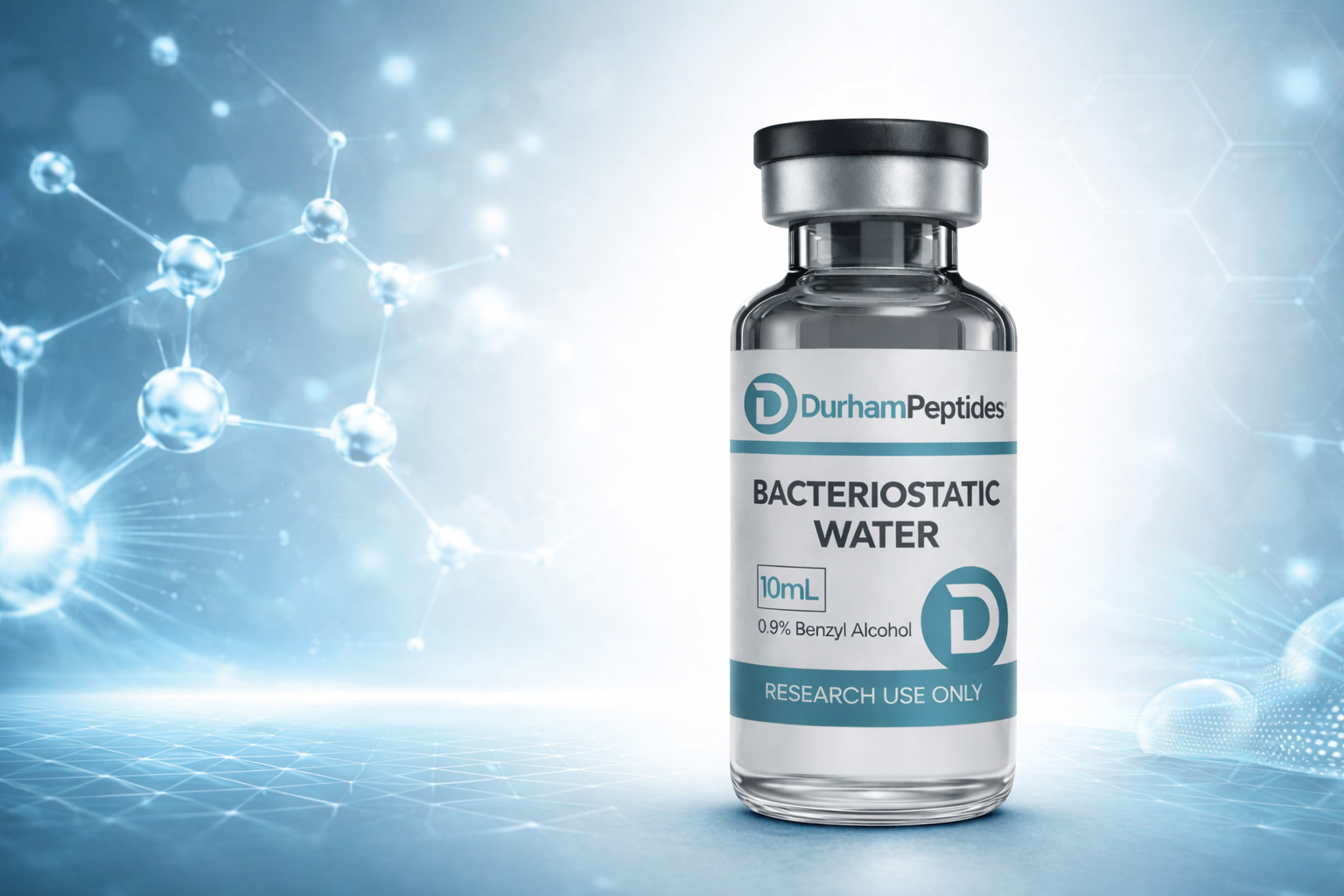
Bacteriostatic water — Sterile water containing 0.9% benzyl alcohol. The benzyl alcohol acts as a preservative, inhibiting bacterial growth and allowing the reconstituted solution to be used across multiple sessions. This is the standard reconstitution solvent for most research peptides.
Insulin syringes — Standard 1mL insulin syringes with fine-gauge needles (typically 29-31 gauge) are used for precise measurement and gentle delivery of the solvent.
Alcohol swabs — For sterilizing vial stoppers and maintaining aseptic technique.
Step-by-Step Reconstitution Protocol
Step 1: Allow both the peptide vial and bacteriostatic water to reach room temperature. Reconstituting a cold peptide with room-temperature water (or vice versa) is acceptable but allowing both to equilibrate reduces thermal stress.
Step 2: Sterilize the rubber stoppers of both the peptide vial and the bacteriostatic water vial using alcohol swabs. Allow the alcohol to evaporate completely before proceeding.
Step 3: Using an insulin syringe, draw the desired volume of bacteriostatic water. The volume depends on the desired final concentration for your research protocol.
Step 4: Insert the needle through the peptide vial's rubber stopper at a slight angle. Slowly dispense the bacteriostatic water down the inside wall of the glass vial. Allow the water to gently run down the wall and onto the lyophilized powder.
Step 5: Once all the water has been added, set the vial down and allow the peptide to dissolve. Most peptides will dissolve within a few minutes without any agitation. If the powder does not fully dissolve, gently roll the vial between your fingers. Do not shake.
Step 6: Once fully dissolved, the solution is ready for use in your research protocol. Store the reconstituted vial upright in a refrigerator at 2–8°C.
Common Mistakes to Avoid
Spraying water directly onto the powder — This is the most common mistake. Directing a stream of water directly onto the lyophilized cake can damage the peptide through mechanical force. Always aim the stream at the glass wall and let it flow down gently.
Shaking the vial — Vigorous shaking can denature the peptide by introducing air bubbles and subjecting the molecules to mechanical stress. If the peptide is slow to dissolve, gentle rolling is acceptable. Shaking is not.
Using regular sterile water instead of bacteriostatic water — Sterile water for injection does not contain a preservative. If used, the reconstituted peptide must be used in a single session or discarded, as there is no protection against microbial contamination. Bacteriostatic water allows for multi-use over approximately 28-30 days.
Using too little solvent — Under-diluting a peptide makes accurate measurement more difficult and increases the concentration of the peptide at the injection point, which may affect experimental consistency.
Repeated freeze-thaw cycles — Once reconstituted, peptides should not be frozen and thawed repeatedly. Each freeze-thaw cycle can degrade the peptide. Store at 2–8°C and use within 30 days.
How Long Do Reconstituted Peptides Last?
When reconstituted with bacteriostatic water and stored at 2–8°C, most peptides remain stable for approximately 28-30 days. Beyond this window, degradation may occur and experimental results could be affected.
Unreconstituted lyophilized peptides, stored properly in sealed vials at 2–8°C, can remain stable for 12-24 months or longer depending on the compound.
For more detailed storage guidance, see our Peptide Storage Guide. For more on bacteriostatic water specifically, see What Is Bacteriostatic Water?. For answers to common questions about peptide ordering, shipping, storage, and reconstitution, visit our FAQ.
Selected Research References
- Manning MC, et al. "Stability of protein pharmaceuticals: an update." Pharm Res. 2010. PMID: 20499141
- Chi EY, et al. "Physical stability of proteins in aqueous solution: mechanism and driving forces in nonnative protein aggregation." Pharm Res. 2003. PMID: 12885479
All products mentioned in this article are sold by Durham Peptides for research and laboratory use only. They are not intended for human or animal consumption, diagnosis, treatment, cure, or prevention of any disease.