
Proper storage is essential for maintaining peptide integrity. Research peptides are biological molecules that can degrade when exposed to heat, moisture, light, or repeated freeze-thaw cycles. Whether you're storing a single vial for a week-long experiment or maintaining a research inventory over several months, understanding the basics of peptide storage will help ensure consistent results.
This guide covers the two states in which you'll encounter peptides — lyophilized (freeze-dried powder) and reconstituted (dissolved in solution) — and the specific storage requirements for each.
Lyophilized (Unreconstituted) Peptides
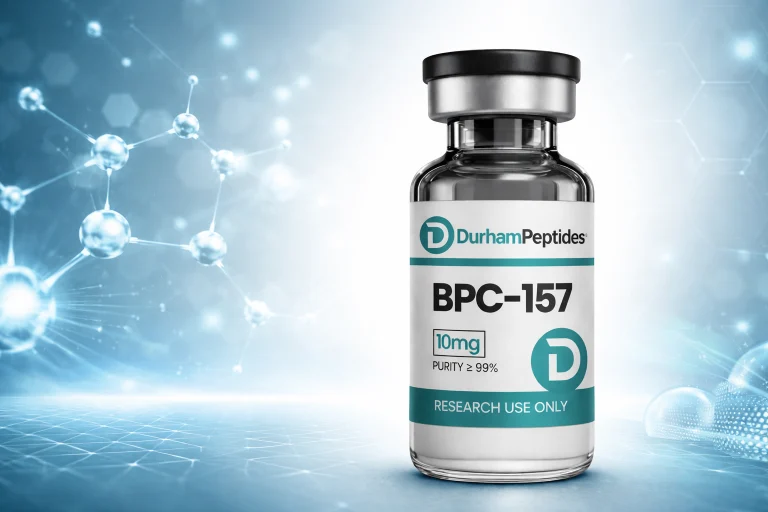
All peptides from Durham Peptides ship as lyophilized powder — a freeze-dried form that removes all water from the peptide, leaving a dry cake or powder in the vial. This is the most stable form for a peptide and the state in which it has the longest shelf life.
For short-term storage (use within 1-3 months), store lyophilized peptides at 2-8°C (standard refrigerator). Keep the vial sealed and protect it from light and moisture.
For long-term storage (3+ months), store lyophilized peptides at -20°C (standard freezer). At this temperature, most lyophilized peptides remain stable for 12-24 months or longer. Some researchers use -80°C for maximum stability, but a standard -20°C freezer is sufficient for most peptides.
The key rules for lyophilized storage are to keep the vial sealed until ready for reconstitution, protect from light (store in a dark location or keep in the original packaging), protect from moisture (humidity degrades lyophilized peptides), and avoid repeated temperature fluctuations (don't move vials between fridge and freezer repeatedly).
Reconstituted Peptides
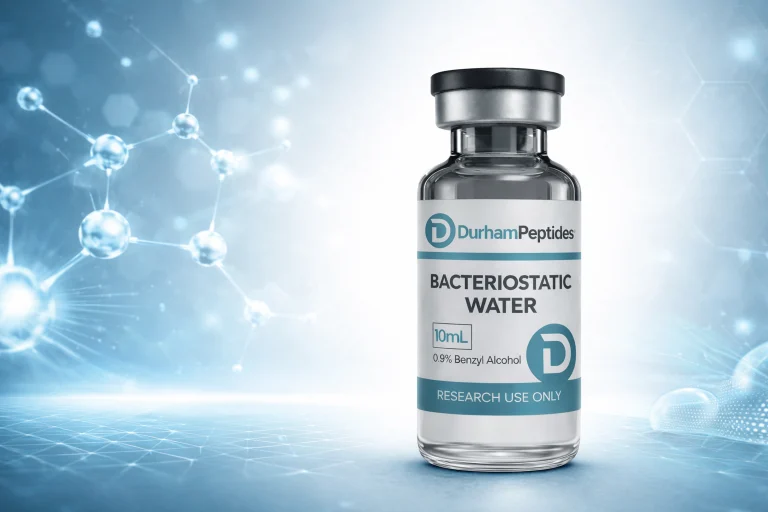
Once a lyophilized peptide has been reconstituted with bacteriostatic water, the storage requirements change. Reconstituted peptides should always be stored at 2-8°C (refrigerator), never at room temperature. They should be used within 28-30 days for optimal stability. Never freeze reconstituted peptides, as freeze-thaw cycles can damage peptide structure. Keep the vial upright and protect it from light.
The 28-day window aligns with the bacteriostatic water's preservative effectiveness. After 28 days, bacterial growth risk increases even with the benzyl alcohol preservative, and peptide degradation may begin to affect results.
Product-Specific Notes
BPC-157, TB-500, and the Wolverine Stack are relatively stable peptides. Standard 2-8°C refrigeration for reconstituted solutions is sufficient. Semaglutide is a larger, more complex molecule. It benefits from careful temperature control and should be reconstituted only when ready for use. GHK-Cu is generally very stable in both lyophilized and reconstituted forms. Standard storage protocols apply. MOTS-c should follow standard lyophilized storage at -20°C for long-term and 2-8°C for short-term. Bacteriostatic water should be stored at room temperature (15-30°C) before opening. Do not freeze. Use within 28 days after first puncture.
Signs of Degradation
While it's not always visually obvious when a peptide has degraded, some warning signs include a change in the appearance of the lyophilized powder (discoloration, liquefaction), cloudiness or particulate matter in a reconstituted solution, an unusual smell after reconstitution, or a powder that won't fully dissolve during reconstitution.
If you observe any of these signs, the peptide may have been compromised by improper storage or handling, and results from that vial may not be reliable.
Storage Quick Reference
Lyophilized (short-term): 2-8°C, sealed, dark, dry — stable for months. Lyophilized (long-
term): -20°C, sealed, dark, dry — stable for 12-24+ months. Reconstituted: 2-8°C, upright, dark — use within 28 days. Bacteriostatic water: Room temperature before opening, use within 28 days after opening. Do not freeze.
All Durham Peptides products ship with storage instructions, and bacteriostatic water for reconstitution is available for purchase alongside any peptide order.
All products mentioned in this article are sold by Durham Peptides for research and laboratory use only. They are not intended for human or animal consumption, diagnosis, treatment, cure, or prevention of any disease.