
If you've ever looked at a peptide product listing and seen the phrase "requires bacteriostatic water for reconstitution," you may have wondered what bacteriostatic water actually is, why it's necessary, and how it differs from regular sterile water. This guide covers everything researchers need to know.
What Is Bacteriostatic Water?
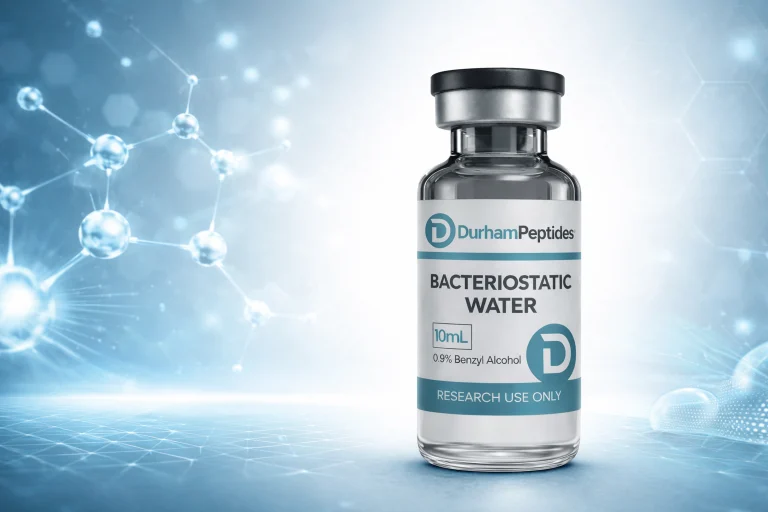
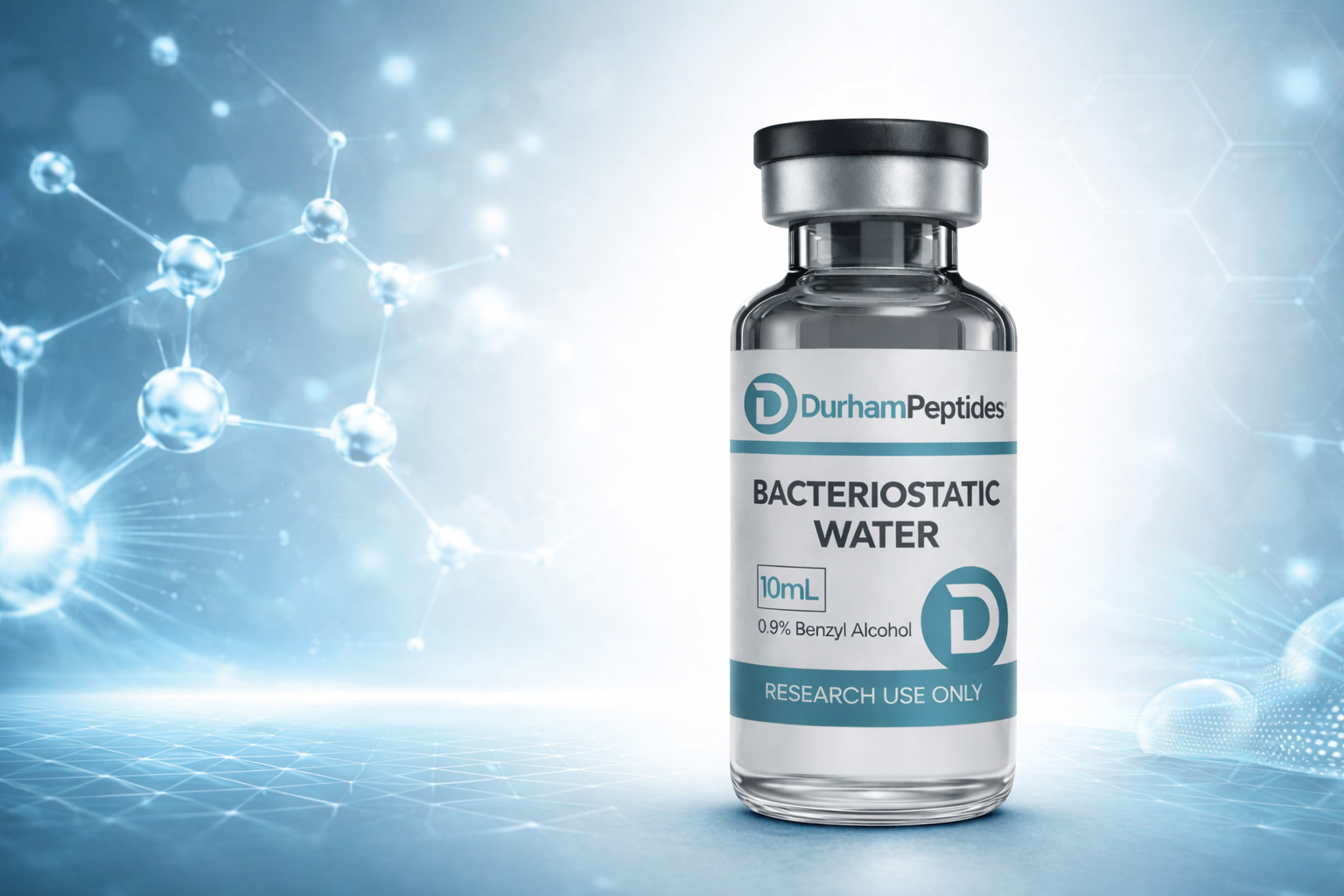
Bacteriostatic water (commonly called BAC water) is a sterile, nonpyrogenic preparation of water for injection that contains 0.9% benzyl alcohol as a bacteriostatic preservative. The benzyl alcohol inhibits the growth of bacteria, which is what makes bacteriostatic water suitable for multiple withdrawals from a single vial over an extended period.
In simpler terms, it's ultra-pure water with a small amount of preservative added to keep it sterile even after you've punctured the vial's rubber stopper multiple times.
How Is It Different from Sterile Water?
Sterile Water for Injection (SWFI) is pure water that has been sterilized but contains no preservative. Once you puncture the vial, bacteria can begin to grow — meaning sterile water is designed for single-use only. Any remaining water in the vial after one withdrawal should be discarded.
Bacteriostatic water, on the other hand, contains the 0.9% benzyl alcohol preservative that prevents bacterial growth. This means a single vial can be used for multiple withdrawals over up to 28 days after first puncture, making it far more practical and cost-effective for research settings where multiple reconstitutions are needed.
For peptide research, bacteriostatic water is the standard. Using sterile water without preservative would require discarding unused portions after each use, which is wasteful and impractical.
Why Do Peptides Need It?
Research peptides from Durham Peptides — and virtually all peptide suppliers — are shipped as lyophilized (freeze-dried) powder. This dry form is stable at room temperature during shipping and has a long shelf life when stored properly. However, the powder must be reconstituted (dissolved back into liquid form) before it can be used in research applications.
Bacteriostatic water is the standard solvent for this reconstitution. The process involves inserting a needle through the vial's rubber stopper and slowly adding bacteriostatic water to the lyophilized peptide. The water should be directed down the side of the vial, not sprayed directly onto the powder, to avoid damaging the peptide. The vial should then be gently swirled — never shaken — until the powder is fully dissolved.
How to Store Bacteriostatic Water
Before opening, bacteriostatic water should be stored at room temperature (15-30°C). It does not need to be refrigerated while sealed. Do not freeze bacteriostatic water — freezing can compromise the vial's integrity and the preservative's effectiveness.
After first use (first needle puncture), the vial should be used within 28 days. After reconstituting a peptide with bacteriostatic water, the reconstituted peptide solution should be stored at 2-8°C (refrigerator) and used within 28-30 days for optimal stability.
How Much Do You Need?
A standard 10mL vial of bacteriostatic water is sufficient to reconstitute multiple peptide vials. The exact amount of water to add per vial depends on the desired concentration, but typical reconstitution volumes range from 1-3mL of bacteriostatic water per peptide vial.
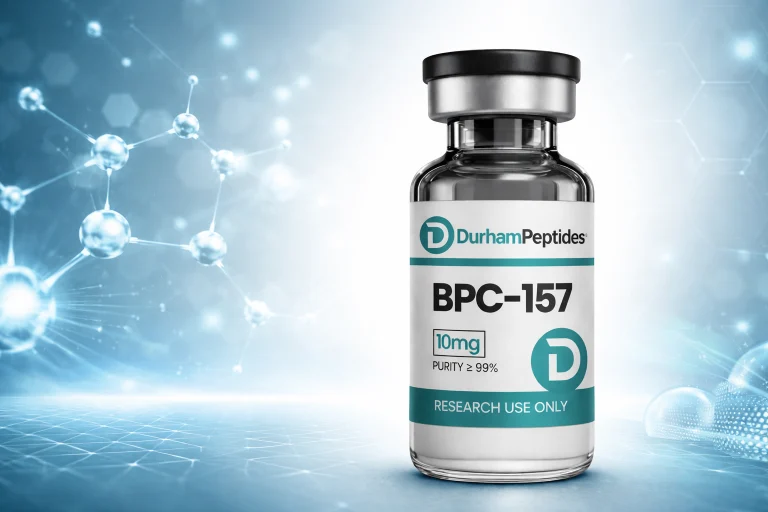
Durham Peptides carries bacteriostatic water in 10mL vials at $14.99 CAD, and it is compatible with all peptides in the catalog including BPC-157, semaglutide, TB-500, Wolverine Stack, GHK-Cu, GLOW Blend, and MOTS-c.
Key Specifications
Durham Peptides bacteriostatic water is supplied as a 10mL glass vial with rubber stopper and flip-off cap. It contains 0.9% benzyl alcohol as preservative. It is sterile and nonpyrogenic. It should be stored at room temperature and not frozen, and should be used within 28 days of first puncture.
All products mentioned in this article are sold by Durham Peptides for research and laboratory use only. They are not intended for human or animal consumption, diagnosis, treatment, cure, or prevention of any disease.