Peptide Reconstitution Chart: Visual Reference Tables for BPC-157, Tirzepatide, GHK-Cu and More
- Durham Peptides

- 1 day ago
- 8 min read

Peptide reconstitution chart visual reference Durham Peptides Canada
A peptide reconstitution chart is a quick-reference table showing concentration, syringe units, and sessions per vial across common reconstitution volumes. The chart format is faster than working through the math each time — once a researcher understands the underlying calculations, the chart provides immediate visual lookup for common scenarios. This article provides reconstitution charts for the major peptides in the Durham Peptides catalog.
For the underlying math that produces these charts, see Peptide Reconstitution Math Step-by-Step: How to Calculate Concentration and Doses by Hand. For the interactive calculator tool, use the Durham Peptides peptide calculator.
How to Use the Charts
Each chart shows reconstitution scenarios for a specific peptide vial size. For each row:
Bacteriostatic Water Added — volume of bacteriostatic water used for reconstitution
Resulting Concentration — mg/mL after reconstitution (Total Mass ÷ Volume)
mg per Syringe Unit — for U-100 insulin syringes (Concentration ÷ 100)
Units for Common Doses — quick lookup for typical research dose amounts
The charts assume U-100 insulin syringes (the standard for research peptide work — 100 units = 1 mL). For different syringe calibrations, see Peptide Insulin Syringes: U-100, Gauge, and Length Guide for Canadian Researchers.
10mg Vial Reconstitution Chart
Applies to most Durham Peptides products at 10mg vial size: BPC-157 10mg, TB-500 10mg, MOTS-c 10mg, Semaglutide 10mg, Tirzepatide 10mg, Retatrutide 10mg, Tesamorelin 10mg, Semax 10mg.
Water Added | Concentration | mg per Unit | Units for 0.25mg | Units for 0.5mg | Units for 1mg | Units for 2mg |
0.5 mL | 20 mg/mL | 0.20 mg | 1.25 | 2.5 | 5 | 10 |
1 mL | 10 mg/mL | 0.10 mg | 2.5 | 5 | 10 | 20 |
2 mL | 5 mg/mL | 0.05 mg | 5 | 10 | 20 | 40 |
3 mL | 3.33 mg/mL | 0.033 mg | 7.5 | 15 | 30 | 60 |
5 mL | 2 mg/mL | 0.02 mg | 12.5 | 25 | 50 | 100 |
Sessions per vial (total mass ÷ dose per session):
0.25mg per session: 40 sessions per vial
0.5mg per session: 20 sessions per vial
1mg per session: 10 sessions per vial
2mg per session: 5 sessions per vial
These session counts apply regardless of reconstitution concentration — the same 10mg vial provides the same total amount of peptide whether reconstituted with 1mL or 5mL of bacteriostatic water.
5mg Vial Reconstitution Chart
Applies to: AOD-9604 5mg.
Water Added | Concentration | mg per Unit | Units for 0.1mg | Units for 0.25mg | Units for 0.5mg | Units for 1mg |
0.5 mL | 10 mg/mL | 0.10 mg | 1 | 2.5 | 5 | 10 |
1 mL | 5 mg/mL | 0.05 mg | 2 | 5 | 10 | 20 |
2 mL | 2.5 mg/mL | 0.025 mg | 4 | 10 | 20 | 40 |
2.5 mL | 2 mg/mL | 0.02 mg | 5 | 12.5 | 25 | 50 |
Sessions per 5mg vial:
0.1mg per session: 50 sessions per vial
0.25mg per session: 20 sessions per vial
0.5mg per session: 10 sessions per vial
1mg per session: 5 sessions per vial
50mg Vial Reconstitution Chart
Applies to: GHK-Cu 50mg.
Water Added | Concentration | mg per Unit | Units for 1mg | Units for 2mg | Units for 3mg | Units for 5mg |
2 mL | 25 mg/mL | 0.25 mg | 4 | 8 | 12 | 20 |
2.5 mL | 20 mg/mL | 0.20 mg | 5 | 10 | 15 | 25 |
5 mL | 10 mg/mL | 0.10 mg | 10 | 20 | 30 | 50 |
10 mL | 5 mg/mL | 0.05 mg | 20 | 40 | 60 | 100 |
Sessions per 50mg vial:
1mg per session: 50 sessions per vial
2mg per session: 25 sessions per vial
3mg per session: ~16 sessions per vial
5mg per session: 10 sessions per vial
Combination Formulation Reconstitution Charts
Combination formulations like the Wolverine Stack and GLOW Blend reconstitute the same way as single-peptide vials — what matters is the total peptide mass in the vial, not how many distinct compounds are in it.
Wolverine Stack (10mg total: BPC-157 5mg + TB-500 5mg)
Water Added | Concentration | mg per Unit | Units for 0.5mg total | Units for 1mg total |
1 mL | 10 mg/mL | 0.10 mg | 5 | 10 |
2 mL | 5 mg/mL | 0.05 mg | 10 | 20 |
Note: each draw delivers proportional amounts of both BPC-157 and TB-500 (50/50 ratio in this formulation).
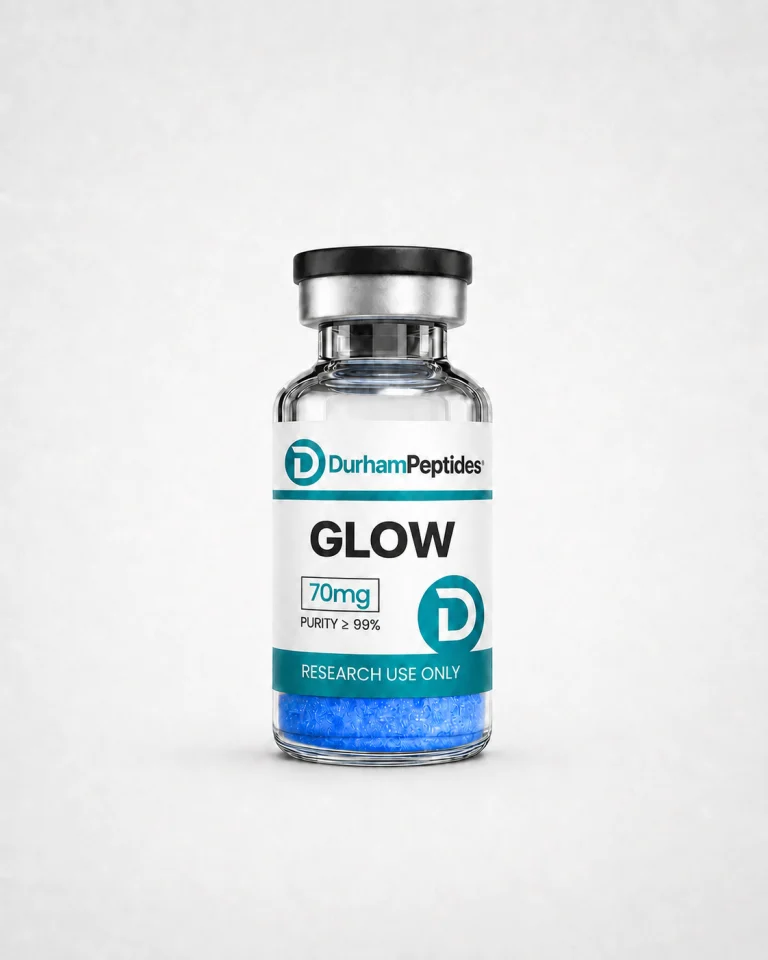
GLOW Blend (70mg total: GHK-Cu 50mg + BPC-157 10mg + TB-500 10mg)
Water Added | Concentration | mg per Unit | Units for 1mg total | Units for 2mg total |
3.5 mL | 20 mg/mL | 0.20 mg | 5 | 10 |
7 mL | 10 mg/mL | 0.10 mg | 10 | 20 |
Note: each draw delivers proportional amounts of all three peptides per the formulation ratio.
For complete combination formulation coverage, see GLOW Blend Composition, KLOW Blend vs GLOW Blend, and Peptide Stacking Guide.
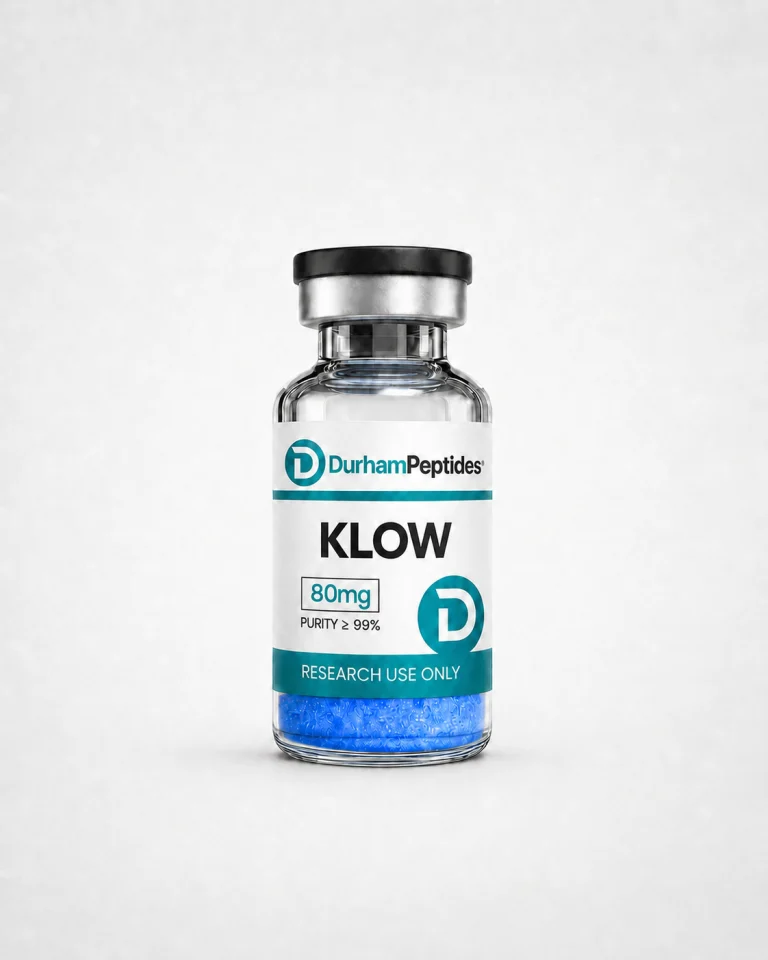
KLOW Blend (80mg total: BPC-157 10mg + GHK-Cu 50mg + TB-500 10mg + KPV 10mg) — see Buy KLOW Blend in Canada for the dedicated reconstitution chart.
How to Read the Chart
Walking through an example: A researcher with a 10mg vial of BPC-157 wants to administer 0.5mg per session.
Option A — Reconstitute with 1mL:
Concentration becomes 10 mg/mL (0.10 mg per unit)
0.5mg = 5 units per session
20 sessions per vial
Option B — Reconstitute with 2mL:
Concentration becomes 5 mg/mL (0.05 mg per unit)
0.5mg = 10 units per session
20 sessions per vial (same total — just larger volume per draw)
Both options work. The choice depends on whether the researcher prefers smaller-volume draws (Option A) or wants more dilute solution for precision (Option B). Sessions per vial is identical because the same 10mg of peptide is being divided into the same 0.5mg portions.
Why Sessions Per Vial Is Independent of Concentration
A common point of confusion: how can the same vial provide the same number of sessions whether reconstituted at 5 mg/mL or 20 mg/mL?
The answer: the total amount of peptide doesn't change with reconstitution volume. 10mg is 10mg regardless of how much water is added. What changes is the per-draw volume:
At 20 mg/mL: 0.5mg = 0.025mL (2.5 units) per draw
At 10 mg/mL: 0.5mg = 0.05mL (5 units) per draw
At 5 mg/mL: 0.5mg = 0.1mL (10 units) per draw
Same total amount of peptide divided into same per-session amounts — the only thing changing is how concentrated each draw is.
Common Reconstitution Concentration Choices
While the charts show multiple concentration options, certain choices are common in practice:
For 10mg vials: 1mL bacteriostatic water → 10 mg/mL is the standard. Clean math (each unit = 0.1mg), reasonable draw volumes, good vial longevity.
For 5mg vials: 1mL bacteriostatic water → 5 mg/mL is the standard for shorter timelines, or 0.5mL → 10 mg/mL for higher concentration.
For 50mg vials (GHK-Cu): 5mL bacteriostatic water → 10 mg/mL is common. Provides clean math (0.1mg per unit) and reasonable draw volumes for typical 1-5mg per session research.
These aren't universal rules — match the concentration to your specific research protocol. The charts provide multiple options because different protocols benefit from different concentrations.
What to Document on the Vial
After reconstitution, label the vial directly with:
Reconstitution date (28-day window starts now)
Concentration in mg/mL
Per-unit amount in mg
Example label: "BPC-157 reconstituted 2026-05-15, 10 mg/mL, 0.1 mg/unit"
The label makes ongoing reference unnecessary — the math is on the vial itself. See How to Build a Peptide Research Protocol: Documentation, Tracking, and Reproducibility.
Storage After Reconstitution
All reconstituted peptides go to refrigerated storage (2-8°C). Practical shelf life is approximately 28 days. Never freeze reconstituted vials. See Peptide Storage & Shelf Life.
Frequently Asked Questions
Why doesn't the chart show every possible dose? The charts show common research dose increments (0.25mg, 0.5mg, 1mg, 2mg for 10mg vials). For other doses, use the math: Units = (Target Dose in mg ÷ Concentration in mg/mL) × 100. See Peptide Reconstitution Math Step-by-Step.
What if my preferred concentration isn't in the chart? Calculate from the foundational math. Concentration = Mass ÷ Volume. For any custom concentration, divide vial mass by your target concentration to get the water volume needed.
Why are the charts different for different vial sizes? The math is the same; the numbers differ. A 50mg vial reconstituted with 5mL gives 10 mg/mL — same per-unit math as a 10mg vial reconstituted with 1mL — but the total sessions per vial is 5x larger because the total peptide is 5x larger.
Does the chart apply to all peptides equally? Yes. The math is the same regardless of which peptide. What changes is the vial mass. A 10mg vial of BPC-157 reconstitutes the same way as a 10mg vial of tirzepatide — same math.
What about U-40 syringes instead of U-100? Different unit-to-mL ratio. On U-40 syringes, each unit = 0.025 mL (not 0.01 mL like U-100). Adjust the per-unit calculations accordingly. See Peptide Insulin Syringes: U-100, Gauge, and Length Guide for Canadian Researchers.
Can I use the chart for non-Durham Peptides products? Yes — the math is universal
across suppliers. What matters is the vial mass and bacteriostatic water volume, not the specific supplier.
What about combination formulations? The math is the same. The vial contains the total combined mass of all peptides; each draw delivers proportional amounts of each component per the formulation ratio. See the combination chart entries above and Peptide Stacking Guide.
Should I round syringe units? For values that don't fall on whole units (like 2.5 units), the closest practical value should be used. Most U-100 syringes have unit markings that allow half-unit precision. For greater precision, choose a concentration that produces whole-number unit values.
What if my target dose isn't covered by the chart columns? Use the math. Units = (Target Dose ÷ Concentration) × 100. Or use the Durham Peptides peptide calculator for any custom dose.
How accurate are these charts? Mathematically exact. Reconstitution math is straightforward division; the values shown follow from the math without approximation. Practical accuracy depends on accurate measurement during reconstitution (using the correct bacteriostatic water volume) and accurate syringe reading during draws.
Does the chart account for reconstitution losses? Minimal losses occur during reconstitution (a small amount remains in the vial after each draw). For practical purposes, the chart values are reliable. Research protocols expecting precision below 1% may need to account for handling losses.
Can I save these charts for offline reference? Yes — Canadian researchers commonly print reconstitution charts for laboratory or research space reference. The charts are research utility resources.
Final Thoughts
A peptide reconstitution chart is faster than working through math each time. Once a researcher understands the underlying calculations (see Peptide Reconstitution Math Step-by-Step), the chart provides immediate visual lookup for common scenarios. The math is straightforward; the charts just make it faster.
For Canadian researchers, the practical takeaways:
Charts show concentration, mg per unit, and units for common dose values across multiple reconstitution volumes
Sessions per vial depends on dose per session, independent of concentration
Common concentrations: 10mg vial → 1mL water → 10 mg/mL (standard math), 50mg vial → 5mL water → 10 mg/mL
Label every reconstituted vial with date, concentration, and per-unit amount
The same math applies to all peptides regardless of supplier
For continued reading, see Peptide Reconstitution Math Step-by-Step, Peptide Reconstitution Calculator Guide, How to Reconstitute Peptides, Peptide Insulin Syringes Guide, and Peptide Storage & Shelf Life.
Use the Durham Peptides peptide calculator for custom scenarios. Browse the complete catalog at durhampeptides.ca/category/all-products.
Selected References
Trissel LA. Handbook on Injectable Drugs. American Society of Health-System Pharmacists. Reference on injectable preparation calculations.
United States Pharmacopeia. USP General Chapter <797>: Pharmaceutical Compounding — Sterile Preparations. Standards on compounding math and sterile preparation.
Manning MC, Chou DK, Murphy BM, Payne RW, Katayama DS. Stability of Protein Pharmaceuticals: An Update. Pharmaceutical Research. 2010;27(4):544-575. https://pubmed.ncbi.nlm.nih.gov/20143256/
International Council for Harmonisation. ICH Q1A(R2): Stability Testing of New Drug Substances and Products. Standards on reconstituted preparation stability.
Wang W. Lyophilization and Development of Solid Protein Pharmaceuticals. International Journal of Pharmaceutics. 2000;203(1-2):1-60. https://pubmed.ncbi.nlm.nih.gov/10967427/
Lam KS. Pharmaceutical Lyophilization Technology. Bioprocess International. 2007;5(8):28-34.
All products sold by Durham Peptides are for research and laboratory use only. They are not intended for human or animal consumption, diagnosis, treatment, cure, or prevention of any disease. This article is informational and does not constitute medical advice.