
One of the most frequently discussed topics in the peptide research community is "stacking" — the practice of combining two or more peptides in a research protocol to study their individual and combined effects. Some combinations have become so well-established that suppliers now offer pre-blended formulations, while others remain areas of active investigation.
This article examines the concept of peptide stacking, the most widely discussed combinations, and what the published research says about multi-peptide approaches.
What Is Peptide Stacking?
In research contexts, peptide stacking refers to the use of two or more peptide compounds — either simultaneously or in sequence — within a single experimental framework. The premise is that different peptides acting through different mechanisms may produce complementary or additive effects that wouldn't be observed with a single compound alone.
This is conceptually similar to combination approaches in other areas of biomedical research, where multi-target strategies are studied for their potential advantages over single-target approaches.
The Wolverine Stack: BPC-157 + TB-500
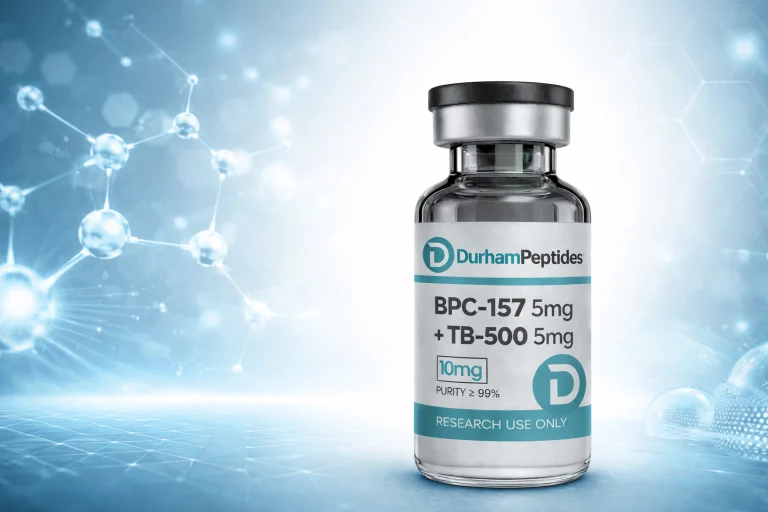
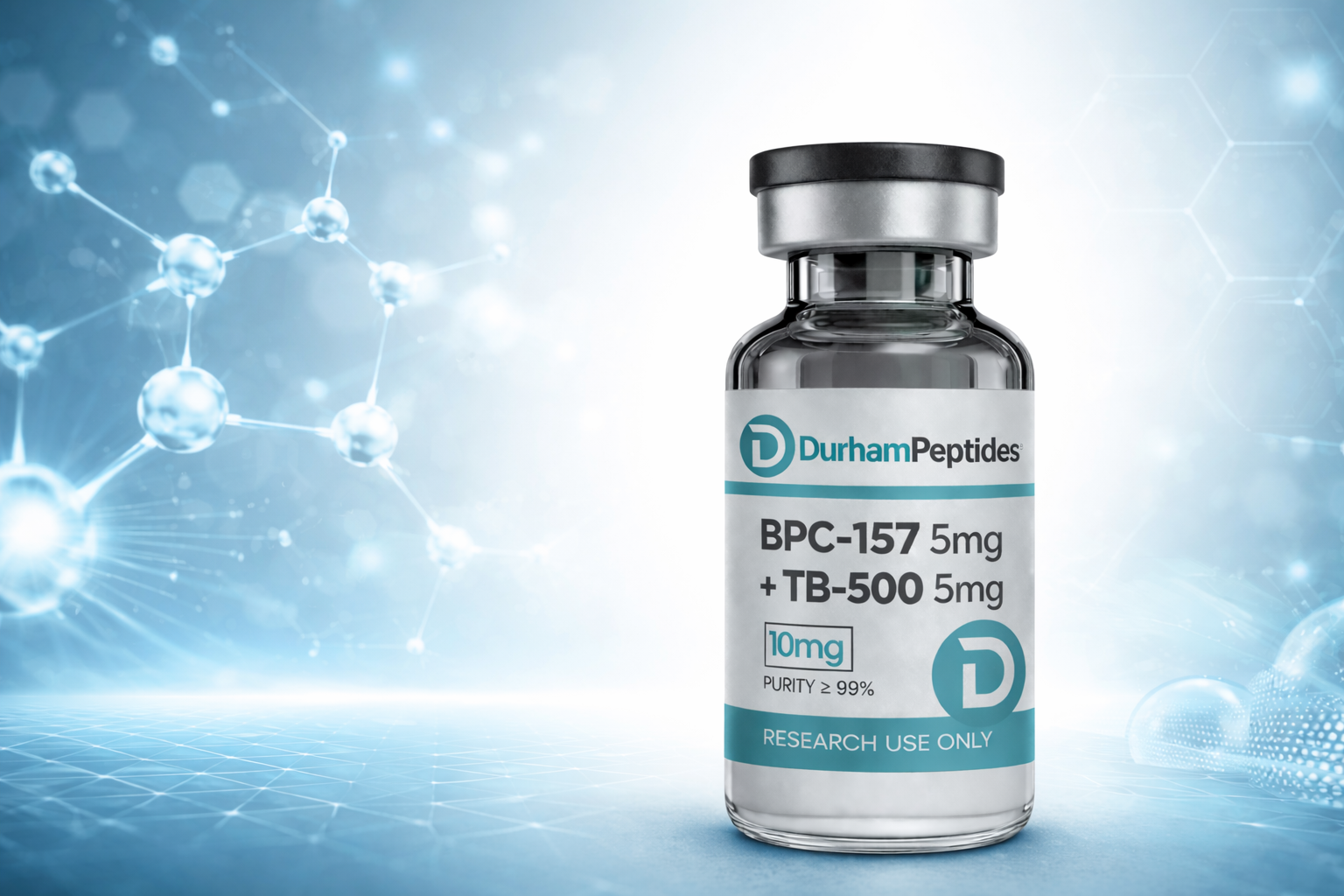
The most well-known peptide combination is the Wolverine Stack — a blend of BPC-157 (5mg) and TB-500 (5mg) in a single vial.
The rationale for this combination is based on complementary mechanisms observed in separate published studies. BPC-157 is studied for angiogenesis (new blood vessel formation), growth factor modulation, nitric oxide signaling, and gastric and connective tissue protective effects. TB-500 is studied for actin regulation and cellular migration, fibroblast and keratinocyte movement to injury sites, anti-inflammatory cytokine modulation, and wound closure in dermal models.
The two peptides appear to address tissue repair through different but potentially complementary pathways — BPC-157 through vascularization and growth factor expression, and TB-500 through structural protein regulation and cellular movement.
It is important to note that while both peptides have been extensively studied individually in preclinical models, published research specifically examining the two compounds used together in a single study is limited. The combination's popularity is based on the complementary nature of their individually studied mechanisms.
Durham Peptides carries both the pre-blended Wolverine Stack and the individual compounds for researchers who prefer to control ratios independently.
The GLOW Blend: GHK-Cu + BPC-157 + TB-500
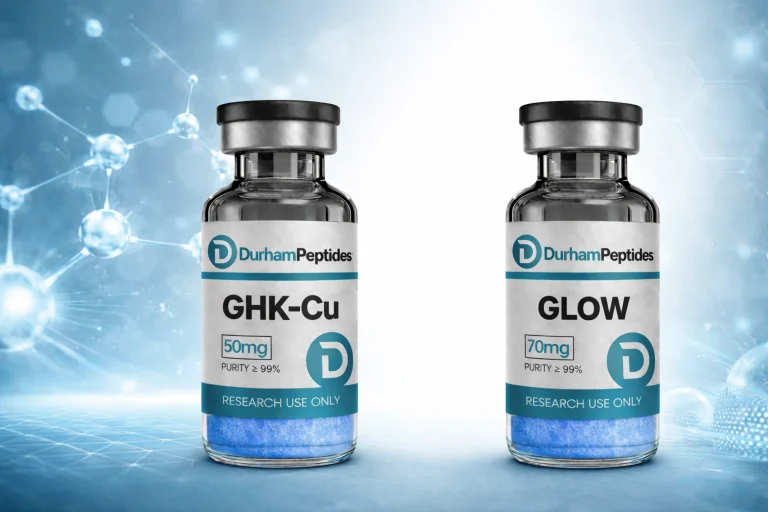
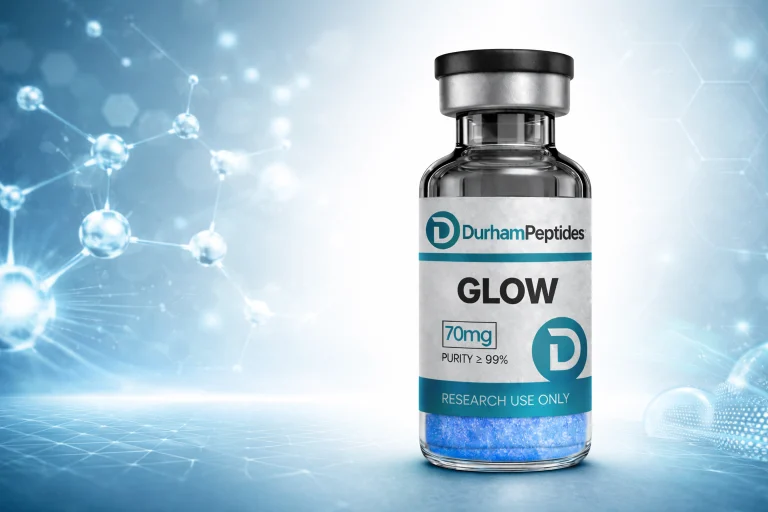
The GLOW Blend takes the multi-peptide approach further by adding GHK-Cu (50mg) to BPC-157 (10mg) and TB-500 (10mg) in a single 70mg vial.
This three-peptide combination targets three distinct areas of biology. GHK-Cu addresses gene expression regulation, collagen synthesis, and antioxidant enzyme production — mechanisms primarily studied in the context of skin aging and regeneration. BPC-157 adds tissue repair and angiogenesis mechanisms. TB-500 contributes cellular migration and wound recovery mechanisms.
The GLOW Blend is particularly discussed among researchers focused on skin biology, anti-aging, and tissue regeneration studies.
For a detailed breakdown, see our article: What Is the GLOW Blend?
The Incretin Progression: Mono → Dual → Triple
While not "stacking" in the traditional sense, the progression from single-receptor to multi-receptor agonists in the incretin peptide class follows a similar logic of combining mechanisms.
Semaglutide activates one receptor (GLP-1). Tirzepatide activates two receptors (GIP + GLP-1). Retatrutide activates three receptors (GLP-1 + GIP + glucagon).
Each additional receptor engagement adds complementary metabolic pathways. Published clinical trial data has shown progressively greater effects with each successive generation, suggesting that multi-target approaches may offer advantages in metabolic research.
Stacking Considerations for Researchers
Researchers working with multiple peptides should keep several factors in mind. Reconstitution complexity increases with multiple compounds — pre-blended formulations like the Wolverine Stack and GLOW Blend eliminate this issue. Storage requirements should be consistent across compounds in a stack — all lyophilized peptides should be stored at 2-8°C. All peptides require reconstitution with bacteriostatic water. Independent COAs should be available for each component in a blend.
Pre-Blended vs Individual Components
Durham Peptides offers both options. Pre-blended formulations provide convenience — single reconstitution, standardized ratios, and simplified protocols. Individual compounds provide flexibility — researchers can adjust ratios, study compounds independently, and design custom combinations.
Browse the full catalog at Durham Peptides.
Selected Research References
- Gwyer D, et al. "BPC 157 and musculoskeletal soft tissue healing." Cell Tissue Res. 2019. PMID: 30915550
- Malinda KM, et al. "Thymosin beta4 accelerates wound healing." J Invest Dermatol. 1999. PMID: 10469335
- Pickart L, et al. "GHK Peptide as a Natural Modulator of Multiple Cellular Pathways in Skin Regeneration." Biomed Res Int. 2015. PMID: 26236730
All products mentioned in this article are sold by Durham Peptides for research and laboratory use only. They are not intended for human or animal consumption, diagnosis, treatment, cure, or prevention of any disease.