

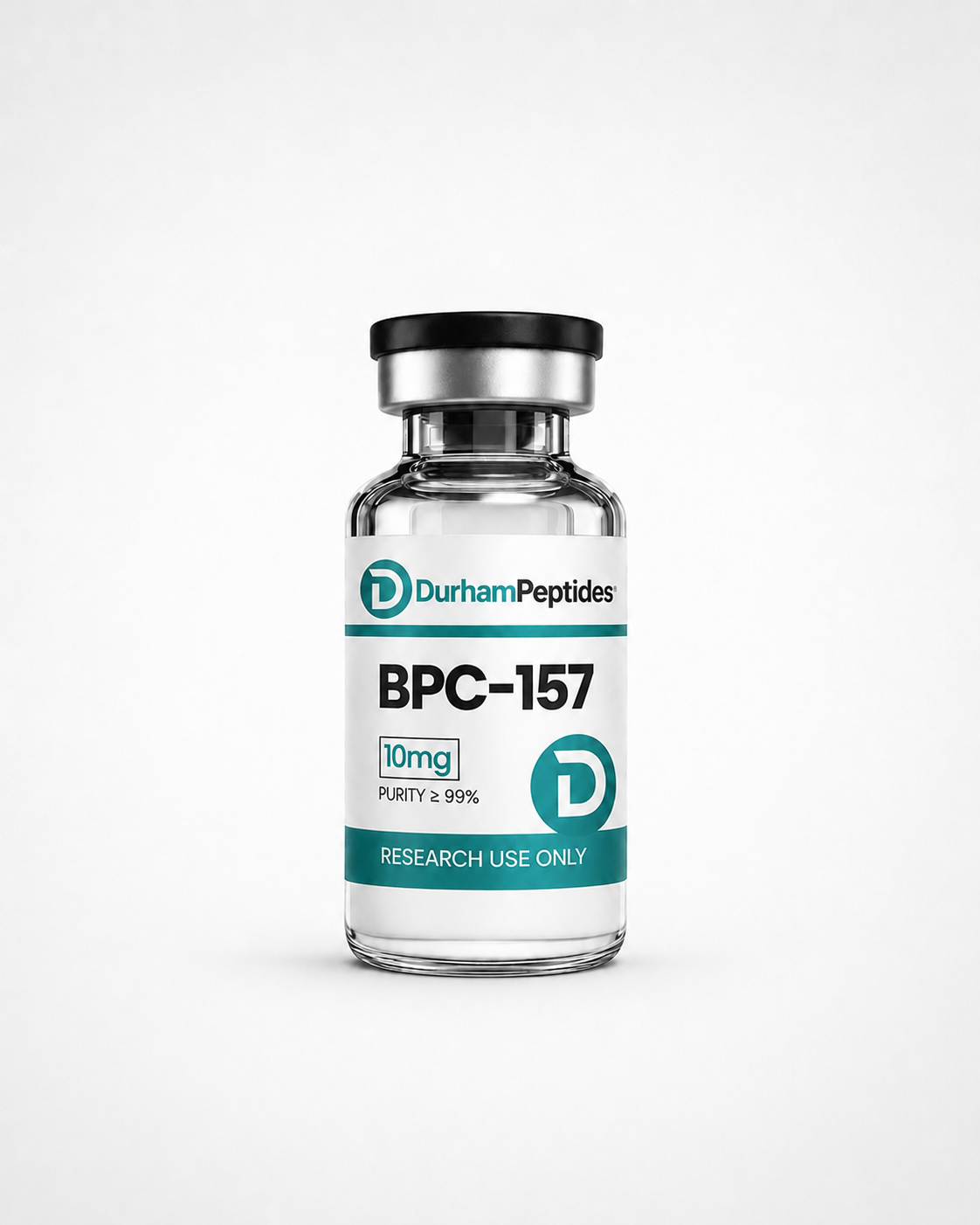
BPC-157 musculoskeletal research tendon bone muscle injury Sikiric Durham Peptides Canada
BPC-157's research literature spans gut biology (its origin), brain-gut axis research (extended applications), and a substantial musculoskeletal research thread that's particularly relevant to recovery and sports injury research questions. The published BPC-157 musculoskeletal research includes tendon-bone interface biology, muscle injury research, ligament research, and broader connective tissue research applications. This article focuses on that musculoskeletal research thread specifically, distinct from the brain-gut axis research thread in BPC-157 for Brain-Gut Axis Research.
For the standalone BPC-157 overview, see What Is BPC-157?; for the parallel TB-500 tendon research, see TB-500 for Tendon and Ligament Research; for the combination research framework, see The Wolverine Stack Explained. Nothing here is medical, dosing, or therapeutic guidance.
Musculoskeletal Research: The Context
Musculoskeletal research covers a broad range of tissue types and injury patterns:
- Tendons — fibrous tissue connecting muscle to bone; common injury sites with limited natural regenerative capacity
- Ligaments — fibrous tissue connecting bone to bone; similarly limited regenerative capacity
- Skeletal muscle — substantial regenerative capacity, but with limits and slower regeneration in aged or severely injured contexts
- Bone — substantial healing capacity but with rate-limited remodeling processes
- Cartilage — very limited regenerative capacity, making cartilage research one of the most challenging musculoskeletal research domains
- Tendon-bone interface (enthesis) — the specialized transition zone where tendon meets bone; biomechanically critical and a common injury site
Each of these tissue types has its own research literature, but BPC-157 has been examined
across multiple of them, making it a research compound with broad musculoskeletal research relevance.
The Sikiric Musculoskeletal Research Foundation
Pavel Sikiric and colleagues at the University of Zagreb have authored the foundational BPC-157 research literature spanning the compound's various application areas. The musculoskeletal research thread is one of the most substantial components of this work, with published research across multiple tissue types and injury models:
Tendon research. Published research has examined investigated BPC-157 effects in tendon transection models, Achilles tendon injury models, and broader tendon biology research. The mechanism research has examined effects on tenocyte (tendon cell) biology, collagen production in tendon tissue, and tendon healing patterns.
Ligament research. Research has examined investigated effects in ligament transection models including knee ligament research models. Similar mechanistic framework as tendon research.
Skeletal muscle research. Published research has examined investigated BPC-157 effects in muscle injury models — including muscle transection, crush injury, and broader muscle damage research. The mechanism research has examined effects on muscle cell biology and muscle regeneration.
Bone research. Research has examined investigated effects in bone defect models and
bone healing research, including effects on bone formation markers and bone repair patterns.
Tendon-bone interface (enthesis) research. A specifically interesting subset — research has examined investigated effects on the specialized tendon-bone transition zone biology, which is biomechanically critical and a common injury site (anchored screw insertion sites, rotator cuff repair, ACL reconstruction insertion sites).
For Sikiric's broader research framework spanning multiple tissue types, see What Is BPC-157?.
Investigated Mechanisms in Musculoskeletal Biology
Several mechanisms have been examined in the BPC-157 musculoskeletal research:
Mechanism 1: Angiogenesis in injury contexts. BPC-157's angiogenesis research thread, central to the compound's broader biology, applies to musculoskeletal research because new blood vessel formation is often rate-limiting in musculoskeletal healing. Tendons in particular have poor baseline vascularity, making angiogenesis effects particularly relevant.
Mechanism 2: VEGF and nitric oxide signaling. The investigated VEGFR2 and NO signaling effects translate to musculoskeletal contexts through vascular biology and tissue oxygenation effects.
Mechanism 3: Cell migration and proliferation in connective tissue. Research has examined investigated effects on fibroblast and tenocyte migration in musculoskeletal injury models — the cellular biology underlying tissue repair.
Mechanism 4: Collagen organization and quality. Beyond just collagen quantity, musculoskeletal healing depends on collagen organization patterns. Research has examined investigated effects on collagen alignment and mechanical quality in repaired musculoskeletal tissue.
Mechanism 5: Growth factor expression. Research has examined investigated BPC-157 effects on growth factor expression in injury contexts — including effects on factors relevant to musculoskeletal biology.
Mechanism 6: Nitric oxide pathway effects. NO signaling has documented roles in musculoskeletal biology including vascular function and tissue homeostasis. BPC-157's investigated NO pathway effects translate to musculoskeletal research applications.
The Tendon-Bone Interface: A Distinctive Research Application
A specific musculoskeletal research area worth highlighting: the tendon-bone interface (enthesis). This specialized zone is one of the more biomechanically critical structures in musculoskeletal biology because:
- Force transfer between tendon and bone passes through this transition zone
- Many common athletic and surgical injuries occur at this interface (rotator cuff, ACL reconstruction sites, Achilles enthesis)
- Natural healing at the enthesis often produces inferior mechanical properties compared to the original tissue
- The healing biology requires coordinated regeneration of multiple tissue types (tendon, bone, transition zone)
Research has examined investigated BPC-157 effects on enthesis biology — making it one of the more research-anchored compounds for this specific musculoskeletal research subset.
Combination Research: Wolverine Stack for Musculoskeletal Applications
The Wolverine Stack combination of BPC-157 + TB-500 is particularly well-aligned with musculoskeletal research because the two compounds engage complementary mechanisms:
- BPC-157 engages angiogenesis (the blood supply mechanism) — particularly relevant for tendons and other poorly-vascularized musculoskeletal tissues
- TB-500 engages cell migration (actin regulation) — particularly relevant for cell mobilization to injury sites and connective tissue research
For the formulation research-design logic, see The Wolverine Stack 1:1 Ratio. For the TB-500 parallel tendon and cardiac research threads, see TB-500 for Tendon and Ligament Research and TB-500 for Cardiac Research.
Musculoskeletal Research vs Other BPC-157 Research Threads
How musculoskeletal research differs from the brain-gut axis and broader recovery research:
Property | Musculoskeletal research | Brain-gut axis research | General recovery research |
Primary tissue focus | Tendon, ligament, muscle, bone, enthesis | Gut tissue + CNS biology | Variable across tissues |
Primary endpoints | Mechanical properties, tissue healing markers, structural endpoints | Behavioral endpoints, GI endpoints, vagal signaling | Tissue closure, repair quality |
Research models | Transection models, crush injury, defect models | Brain-gut paradigm models | Variable tissue injury models |
Time horizons | Weeks to months (slow musculoskeletal healing) | Hours to weeks | Days to weeks |
Foundational references | Sikiric musculoskeletal series | Sikiric 2016 brain-gut review | Sikiric general framework |
The threads share mechanistic foundations (angiogenesis, growth factor effects, cell migration) but represent distinct research design choices.
Practical Research Considerations
Durham Peptides supplies BPC-157 in two formats:
- BPC-157 10mg at C$65.69 (C$6.57/mg)
- BPC-157 20mg at C$94.99 (C$4.75/mg)
For high-volume musculoskeletal research, the 20mg vial captures meaningful per-mg savings. Both formats Janoshik-verified to ≥99% purity by HPLC with mass-spec identity confirmation; 100% synthetic; vegan. Storage: 2–8°C short-term, -20°C long-term, protected from light and moisture; reconstitute in bacteriostatic water.
For combination musculoskeletal research engaging both angiogenesis (BPC-157) and cell migration (TB-500), see the Wolverine Stack 10mg (C$79.99) or separate vials of BPC-157 and TB-500 for non-1:1 research designs.
Frequently Asked Questions
Is BPC-157 studied for tendon research specifically? Yes — the Sikiric-group research has examined investigated BPC-157 effects in tendon transection models, Achilles tendon research, and broader tendon biology. Tendons are particularly relevant BPC-157 research targets because they have poor baseline vascularity, making the angiogenesis mechanism particularly relevant.
Does BPC-157 research extend to muscle injury? Yes — published research has examined investigated effects in muscle injury models including transection and crush injury research. The mechanism research extends across the broader connective tissue research framework.
What's the tendon-bone interface and why does it matter for BPC-157 research? The enthesis is the specialized transition zone where tendon meets bone — biomechanically critical, a common injury site, and often heals with inferior mechanical properties. Research has examined investigated BPC-157 effects on enthesis biology specifically.
How does BPC-157 musculoskeletal research compare to TB-500 musculoskeletal research? Both compounds have musculoskeletal research literature. BPC-157 emphasizes angiogenesis (relevant to poorly-vascularized musculoskeletal tissues); TB-500 emphasizes cell migration (relevant to cell mobilization to injury sites). The Wolverine Stack combines both. See TB-500 for Tendon and Ligament Research.
Is BPC-157 studied for bone research? Yes — published research has examined investigated effects in bone defect and bone healing models, including effects on bone formation markers. The bone research is less voluminous than the tendon research but is established.
Where can I buy BPC-157 in Canada? Durham Peptides supplies BPC-157 10mg (C$65.69) and BPC-157 20mg(C$94.99), both Janoshik-verified.
Final Thoughts
BPC-157's musculoskeletal research thread is one of the most substantial application areas in the broader BPC-157 research literature — spanning tendon, ligament, muscle, bone, and tendon-bone interface research with published Sikiric-group research across multiple tissue types and injury models. The mechanistic foundation — angiogenesis, cell migration, collagen organization, growth factor effects — addresses bottlenecks specific to musculoskeletal healing biology where natural regeneration is often limited or produces inferior mechanical outcomes. For researchers designing protocols around tendon biology, sports injury research, connective tissue research, or the broader musculoskeletal research landscape, BPC-157's research base provides one of the more developed mechanistic foundations available.
For the standalone overview, see What Is BPC-157?; for the brain-gut axis thread, see BPC-157 for Brain-Gut Axis Research; for the TB-500 tendon research, see TB-500 for Tendon and Ligament Research; for the combination Wolverine Stack approach, see The Wolverine Stack Explained; for the Glow Blend alternative with GHK-Cu added, see Wolverine Stack vs Glow Blend.
Selected Research References
- Sikiric P, Seiwerth S, Rucman R, et al. Stable Gastric Pentadecapeptide BPC 157: Novel Therapy in Gastrointestinal Tract. Current Pharmaceutical Design. 2011;17(16):1612-1632. https://pubmed.ncbi.nlm.nih.gov/21548867/
- Chang CH, Tsai WC, Lin MS, Hsu YH, Pang JH. The Promoting Effect of Pentadecapeptide BPC 157 on Tendon Healing Involves Tendon Outgrowth, Cell Survival, and Cell Migration. Journal of Applied Physiology. 2011;110(3):774-780. https://pubmed.ncbi.nlm.nih.gov/21030672/
- Krivic A, Anic T, Seiwerth S, Huljev D, Sikiric P. Achilles Detachment in Rat and Stable Gastric Pentadecapeptide BPC 157: Promoted Tendon-to-Bone Healing and Opposed Corticosteroid Aggravation. Journal of Orthopaedic Research. 2006;24(5):982-989. https://pubmed.ncbi.nlm.nih.gov/16583442/
- Cerovecki T, Bojanic I, Brcic L, et al. Pentadecapeptide BPC 157 (PL 14736) Improves Ligament Healing in the Rat. Journal of Orthopaedic Research. 2010;28(9):1155-1161. https://pubmed.ncbi.nlm.nih.gov/20225319/
- Mikus D, Sikiric P, Seiwerth S, et al. Pentadecapeptide BPC 157 Cream Improves Burn-Wound Healing and Vascular Maturation in Mice. Journal of Burn Care & Research. 2001;22(3):200-205. (Reference on broader BPC-157 tissue repair biology.)
All products sold by Durham Peptides are for research and laboratory use only. They are not intended for human or animal consumption, diagnosis, treatment, cure, or prevention of any disease.