

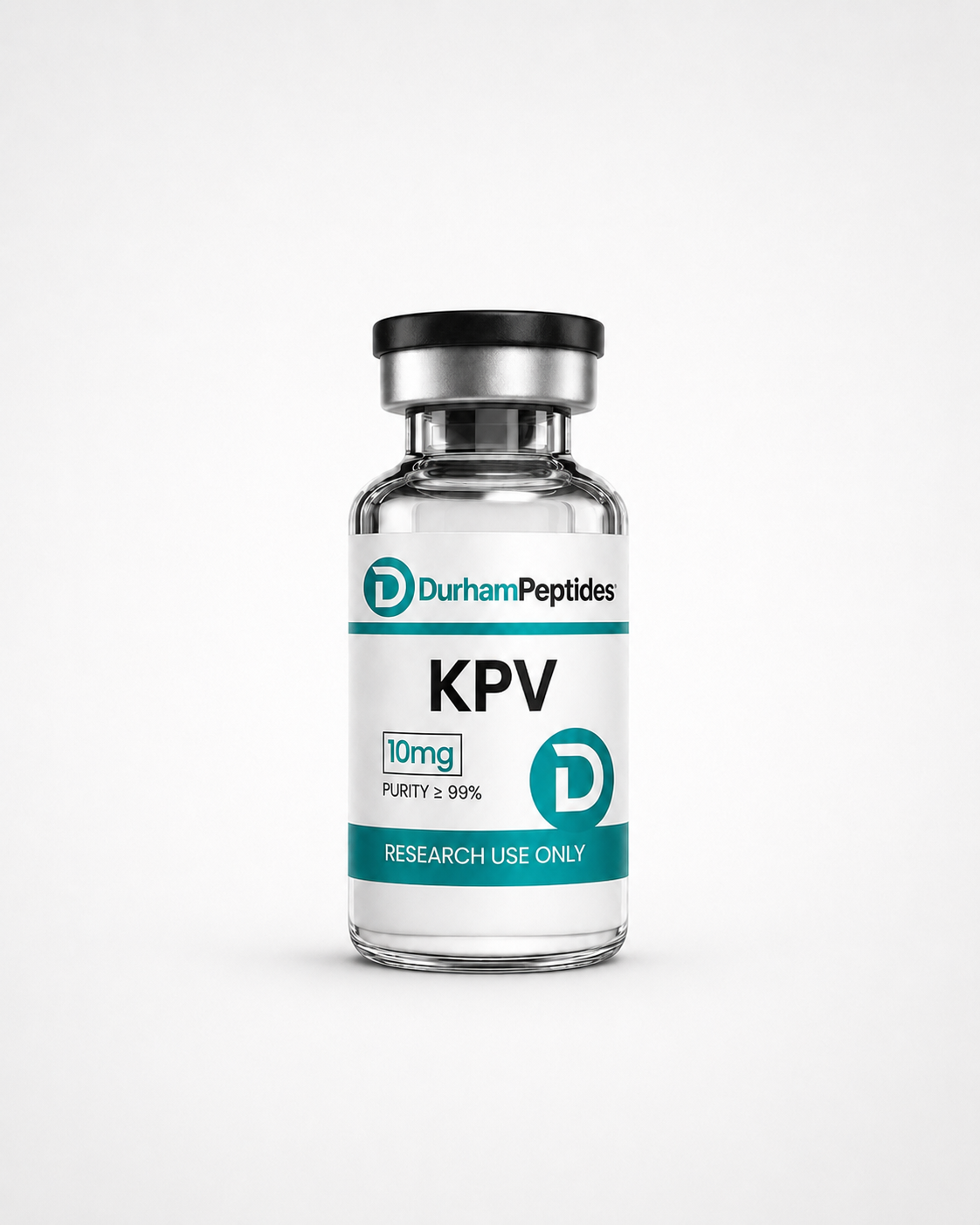
KPV tripeptide skin research dermatological anti-inflammatory alpha-MSH Durham Peptides Canada
KPV's research literature spans inflammatory bowel models, systemic inflammation, and dermatological research — but the gut/IBD angle has dominated most coverage of the compound. The skin-research angle is genuinely distinct, deserves its own treatment, and is increasingly relevant given KPV's inclusion in skin-focused research blends like KLOW. This article focuses specifically on KPV's place in skin and dermatological research — the α-MSH heritage that connects it to skin biology, the published research thread, and how KPV fits alongside GHK-Cu and BPC-157 in skin-research formulations.
For the broader KPV overview, see What Is KPV?; for the gut-research angle specifically, see KPV vs BPC-157 for Gut Research; for the skin-research landscape across multiple peptides, see Peptide Research for Skin Health. Nothing here is medical, dosing, or therapeutic guidance.
The α-MSH Connection: Why KPV Belongs in Skin Research
KPV's relevance to skin research traces directly back to its origin. KPV — Lys-Pro-Val — is the C-terminal tripeptide fragment of α-melanocyte-stimulating hormone (α-MSH), a 13-amino-acid peptide hormone with two notable properties: it's a major regulator of melanocyte activity (the basis of its name), and it has well-documented anti-inflammatory activity, particularly studied in skin biology.
α-MSH itself is one of the most-studied peptide hormones in dermatological research, with literature spanning melanocyte biology, UV response, skin pigmentation, wound healing, and cutaneous inflammation. KPV was identified as the fragment that retains the anti-inflammatory activity of the parent hormone while not driving the melanocortin-receptor-mediated pigmentation effects in the same way. That separation makes KPV a research tool for studying anti-inflammatory pathways in skin contexts — keeping the dermatologically-relevant anti-inflammatory mechanism while isolating it from the melanocortin-mediated pigmentation biology.
So KPV's place in skin research isn't incidental — it's structurally inherited from one of the
most-studied hormones in skin biology.
The Molecular Basics
- Sequence: Lys-Pro-Val (H-Lys-Pro-Val-OH)
- Molecular weight: ~342.4 g/mol
- CAS number: 67727-97-3
- Class: Synthetic tripeptide; α-MSH C-terminal fragment
At three amino acids, KPV is among the smallest research peptides — comparable in size to the tripeptide-copper complex GHK-Cu before counting its copper.
Skin Research Area 1: Allergic and Contact Dermatitis Models
The most-developed area of KPV skin research is in models of allergic and contact dermatitis. Research has examined KPV's investigated effects in:
- Allergic contact dermatitis models (chemical sensitizer-induced skin reactions in rodent research)
- Mast cell activity in skin (mast cell degranulation as a driver of allergic skin responses)
- Inflammatory cytokine reduction in skin tissue
- Skin barrier function under inflammatory stress
These research models test how dampening anti-inflammatory signaling in skin tissue affects the cascade of immune activation, mediator release, and tissue inflammation that drives allergic skin reactions. KPV has been studied for investigated effects across this cascade.
Skin Research Area 2: UV-Induced Skin Inflammation
Given α-MSH's role in UV response (skin pigmentation is part of the body's UV defense system), KPV has been studied in UV-induced skin inflammation models. Research has examined:
- UV-induced inflammatory cytokine expression
- Sunburn-related inflammatory pathways
- Skin barrier function under UV stress
- Photoaging-related inflammatory signaling
This research connects to the broader skin-aging research category and partially explains why KPV appears alongside GHK-Cu (which has its own extensive skin-aging research literature) in formulations like KLOW.
Skin Research Area 3: Wound Healing and Skin Barrier Research
KPV's anti-inflammatory mechanism also places it in wound healing and skin barrier research — overlapping with the broader tissue-repair peptide research landscape. Excessive or prolonged inflammation impairs wound healing; modulating it has been studied as a research approach to skin-repair questions. KPV's research here is less developed than its IBD literature but complements its appearance in skin-focused multi-peptide blends.
Skin Research Area 4: Cytokine Signaling in Skin Tissue
At the mechanistic level, KPV has been studied for NF-κB pathway modulation and pro-inflammatory cytokine reduction (TNF-α, IL-6, IL-1β) in skin-relevant tissue contexts. NF-κB is a central inflammatory transcription factor active in many skin conditions, and the cytokines listed are drivers of inflammatory skin responses. KPV's effects on this signaling system in skin tissue is the mechanistic foundation of its dermatological research applications.
KPV in Skin-Research Blends: GLOW and KLOW
KPV's skin-research role connects directly to two of Durham Peptides' multi-peptide formulations:
GLOW Blend does NOT contain KPV — it's GHK-Cu + BPC-157 + TB-500. GLOW is the three-peptide skin-and-recovery formulation focused on gene expression (GHK-Cu), angiogenesis (BPC-157), and cell migration (TB-500).
KLOW Blend = GLOW + KPV. The K stands for KPV. KLOW adds KPV to the three-peptide GLOW base specifically to bring in dedicated anti-inflammatory signaling alongside the gene-expression, angiogenesis, and cell-migration mechanisms.
The conceptual framing: KLOW's design treats inflammation as a distinct fourth mechanism to address in skin-and-recovery research, parallel to and complementary with the three GLOW mechanisms. For the comparison, see GLOW vs KLOW and What Is the KLOW Blend?.
How KPV Fits Alongside GHK-Cu in Skin Research
KPV and GHK-Cu are the two tripeptides with dedicated skin-research literatures in the Durham Peptides catalog. They work through completely different mechanisms:
- GHK-Cu is studied for gene expression modulation, collagen synthesis, and broad skin-regeneration research. Hundreds of genes affected. Decades of published research. See Copper Peptides Explained.
- KPV is studied specifically for anti-inflammatory signaling in skin contexts. NF-κB and cytokine modulation. α-MSH heritage.
In research designed around comprehensive skin biology, both can appear — different mechanisms addressing different aspects of skin research. This is part of why KLOW combines them with BPC-157 (angiogenesis) and TB-500 (cell migration) for a four-mechanism formulation.
Research Considerations
KPV's small size (three amino acids) has been investigated for some research-relevant properties beyond its mechanism — including studies of PepT1 transporter uptake in some tissue contexts, which has been examined as a route for localized activity. For skin research specifically, the relevant point is that KPV is small, structurally simple, and chemically stable enough to be a practical research tool across multiple delivery contexts in laboratory models.
Frequently Asked Questions
Is KPV used in skin research? Yes — KPV's α-MSH-derived heritage gives it a substantial research literature in skin and dermatological contexts, including allergic dermatitis, UV-induced skin inflammation, wound research, and cytokine signaling in skin tissue.
Why is KPV relevant to skin biology specifically? Because it's the C-terminal fragment of α-MSH (alpha-melanocyte-stimulating hormone), which itself is a major skin-biology hormone. KPV retains the anti-inflammatory portion of α-MSH's activity while not driving the melanocortin-mediated pigmentation effects.
Does KPV replace GHK-Cu in skin research? No — they engage different mechanisms. GHK-Cu modulates gene expression and collagen synthesis; KPV modulates anti-inflammatory signaling. They're complementary, which is why KLOW combines them.
What's the difference between KPV in GLOW and KLOW? GLOW doesn't contain KPV — it's a three-peptide formulation (GHK-Cu + BPC-157 + TB-500). KLOW adds KPV as the fourth component specifically for anti-inflammatory signaling alongside the three GLOW mechanisms.
Where can I buy KPV in Canada? Durham Peptides supplies KPV 10mg (C$45.99) standalone and as a component of the KLOW Blend (C$169.96, four peptides).
What about KPV for gut research? KPV has a separate, well-developed research literature in inflammatory bowel models. See What Is KPV? and KPV vs BPC-157 for Gut Research.
Final Thoughts
KPV's skin-research place is structurally inherited from its α-MSH origin — one of the most-studied hormones in dermatological research. The tripeptide retains the anti-inflammatory dimension of the parent hormone while isolating it from the melanocortin-mediated pigmentation effects, producing a research tool for studying inflammation in skin contexts without the broader melanocortin biology. Its inclusion alongside GHK-Cu, BPC-157, and TB-500 in the KLOW blend reflects a four-mechanism approach to skin research: gene expression, angiogenesis, cell migration, and anti-inflammatory signaling all engaged through different compounds in one formulation.
For the standalone KPV overview, see What Is KPV?; for the broader skin-peptide research landscape, see Peptide Research for Skin Health; for the KLOW formulation, see What Is the KLOW Blend?.
Selected Research References
- Hiltz ME, Lipton JM. Antiinflammatory Activity of a COOH-Terminal Fragment of the Neuropeptide Alpha-MSH. FASEB Journal. 1989;3(11):2282-2284. https://pubmed.ncbi.nlm.nih.gov/2550304/
- Catania A, Lonati C, Sordi A, Carlin A, Leonardi P, Gatti S. The Melanocortin System in Control of Inflammation. The Scientific World Journal. 2010;10:1840-1853. https://pubmed.ncbi.nlm.nih.gov/20852829/
- Dalmasso G, Charrier-Hisamuddin L, Nguyen HT, et al. PepT1-Mediated Tripeptide KPV Uptake Reduces Intestinal Inflammation. Gastroenterology. 2008;134(1):166-178. https://pubmed.ncbi.nlm.nih.gov/18061177/
- Kannengiesser K, Maaser C, Heidemann J, et al. Melanocortin-Derived Tripeptide KPV Has Anti-Inflammatory Potential in Murine Models of Inflammatory Bowel Disease. Inflammatory Bowel Diseases. 2008;14(3):324-331. https://pubmed.ncbi.nlm.nih.gov/18092346/
All products sold by Durham Peptides are for research and laboratory use only. They are not intended for human or animal consumption, diagnosis, treatment, cure, or prevention of any disease.