

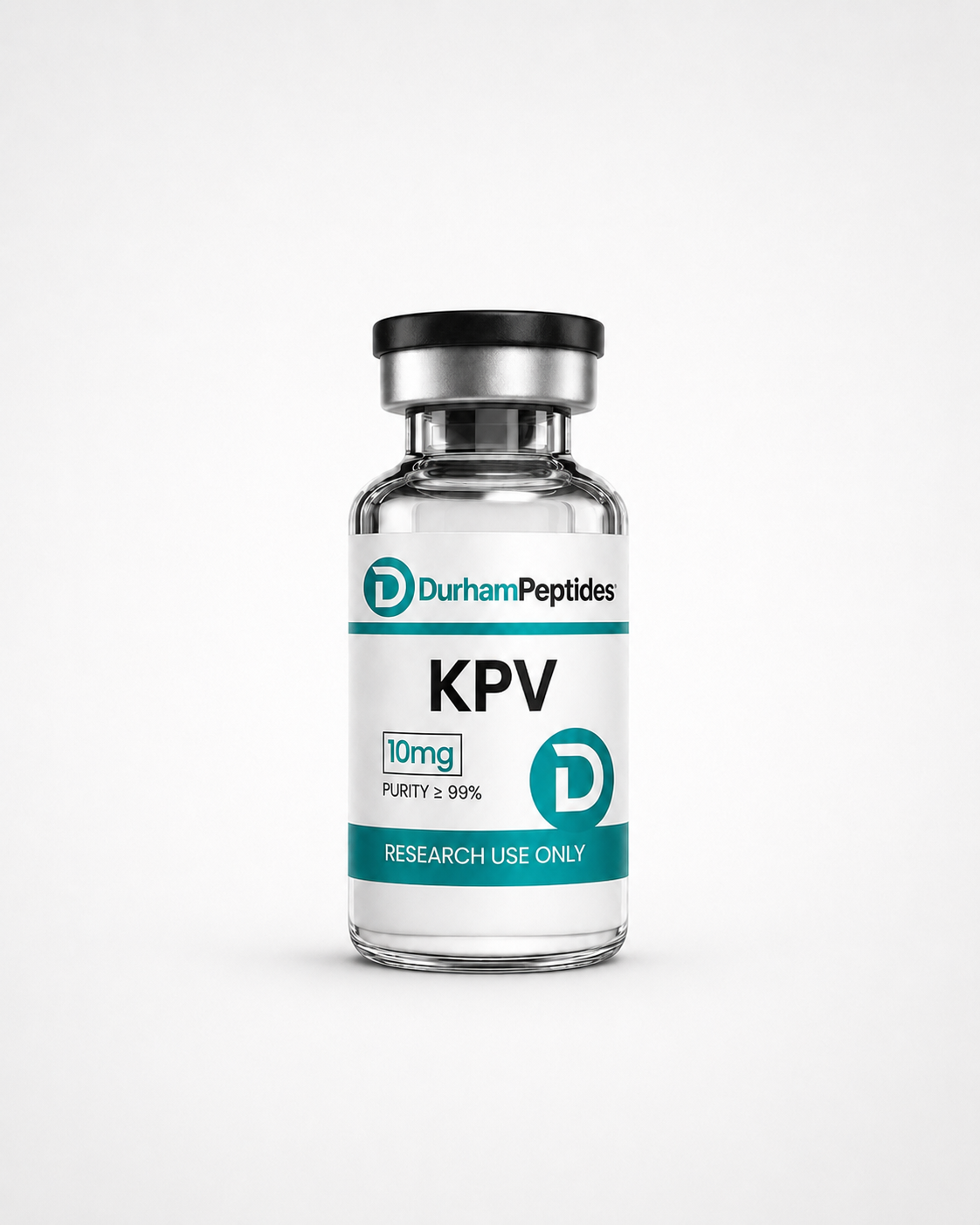
KPV respiratory asthma research airway inflammation tripeptide α-MSH Durham Peptides Canada
KPV's research literature spans multiple anti-inflammatory application areas — skin biology, inflammatory bowel disease, and broader anti-inflammatory research. A less commonly discussed but mechanistically interesting research thread examines KPV in
respiratory and asthma research — airway inflammation contexts where the α-MSH-derived anti-inflammatory mechanism intersects with the specific biology of respiratory inflammation. This article focuses on that research thread, distinct from the skin angle in KPV for Skin Research and the IBD angle in KPV for Inflammatory Bowel Disease Research.
For the standalone KPV overview, see What Is KPV?; for the BPC-157 comparison in gut contexts, see KPV vs BPC-157 for Gut Research. Nothing here is medical, dosing, or therapeutic guidance.
Respiratory Inflammation: The Research Context
Respiratory inflammation research encompasses several overlapping conditions:
Asthma — the most common chronic respiratory inflammation condition. Involves dysregulated immune responses to environmental triggers, airway hyperresponsiveness, eosinophilic inflammation in many forms, and characteristic Th2 immune polarization in allergic asthma research.
COPD (chronic obstructive pulmonary disease) — chronic airway inflammation with different immune polarization than asthma (more neutrophilic, more Th1/Th17 in some research framings). Often associated with smoking-related airway damage.
Allergic rhinitis — upper airway inflammation with mechanistic similarities to allergic asthma. Often co-occurs with asthma in research populations.
Pulmonary fibrosis — progressive scarring of lung tissue, with distinct mechanisms from inflammatory airway conditions.
The respiratory research field uses standardized models — including ovalbumin-sensitization mouse models for allergic asthma, smoke-exposure models for COPD, and various challenge paradigms.
Why α-MSH-Derived Compounds for Respiratory Research
KPV's molecular origin is the C-terminal tripeptide fragment of α-MSH (alpha-melanocyte-stimulating hormone). α-MSH itself has substantial research literature in respiratory contexts, with documented investigated effects on airway inflammation. Several biological reasons connect α-MSH biology to respiratory research:
Connection 1: Melanocortin receptors in the airway. Melanocortin receptors (MC1R, MC3R, MC5R) are expressed on airway epithelial cells, alveolar macrophages, and other lung immune cells. The receptor expression provides the molecular basis for α-MSH-derived compounds to have direct airway effects.
Connection 2: Anti-inflammatory α-MSH biology in respiratory contexts. α-MSH has documented investigated anti-inflammatory effects across multiple tissue contexts, with the respiratory tract being one of the research areas where these effects have been examined.
Connection 3: NF-κB pathway in airway inflammation. NF-κB is a central inflammatory transcription factor active in airway inflammation biology. KPV's investigated NF-κB pathway modulation (documented in IBD research — see KPV for Inflammatory Bowel Disease Research) applies conceptually to respiratory inflammation as well.
Connection 4: Pro-inflammatory cytokine reduction. TNF-α, IL-6, IL-1β, and various interleukins are central to respiratory inflammation biology. KPV's investigated effects on pro-inflammatory cytokines (across multiple research contexts) intersect with respiratory inflammation research targets.
Connection 5: Eosinophil biology. Asthma research (particularly allergic asthma) involves substantial eosinophilic inflammation. Research on α-MSH-derived compounds has examined effects on eosinophil biology in research models.
Investigated KPV Effects in Respiratory Research
Published research has examined investigated KPV and α-MSH-derived compound effects in respiratory research models:
Investigated effect 1: Allergic airway inflammation reduction. Research using ovalbumin-sensitization mouse models has examined investigated effects on airway eosinophilic inflammation, inflammatory cell infiltration, and airway responsiveness measures.
Investigated effect 2: Cytokine reduction in airway tissue. Research has examined investigated effects on pro-inflammatory cytokines (TNF-α, IL-6, and various interleukins) and chemokines in airway tissue and bronchoalveolar lavage fluid.
Investigated effect 3: Th2 cytokine effects. Allergic asthma involves Th2 polarization with elevated IL-4, IL-5, and IL-13. Research has examined investigated effects on Th2 cytokine production in research models.
Investigated effect 4: Airway epithelial biology. Research has examined investigated effects on airway epithelial cell biology, including effects on tight junction proteins (airway barrier integrity, analogous to gut barrier biology in IBD research) and epithelial inflammation markers.
Investigated effect 5: Inflammatory cell infiltration. Research has examined investigated effects on inflammatory cell recruitment to airway tissue — including eosinophils, neutrophils (in COPD-like models), and macrophages.
Investigated effect 6: Mast cell biology. Mast cells contribute to allergic respiratory inflammation through histamine and other inflammatory mediator release. Research has examined investigated effects on mast cell-related endpoints in research models.
KPV's Specific Research-Tool Properties for Respiratory Research
Several KPV-specific properties make it research-relevant for respiratory inflammation research:
Property 1: Small size and stability. KPV is a tripeptide (Lys-Pro-Val) — smaller and more stable than the full α-MSH 13-amino-acid peptide. The smaller structure simplifies handling, storage, and research design while retaining the anti-inflammatory portion of α-MSH biology.
Property 2: Multiple potential research administration approaches. The small size of KPV makes various research administration approaches feasible — relevant for respiratory research where local airway delivery (vs systemic) is a research-design consideration in some protocols.
Property 3: Cross-application research relevance. KPV's research applications spanning skin, gut, and respiratory contexts reflect the broader α-MSH biology applicability. The cross-application research base means findings in one application area inform research design in others.
For the skin research thread, see KPV for Skin Research; for the IBD research thread, see KPV for Inflammatory Bowel Disease Research; for the broader compound overview, see What Is KPV?.
Respiratory Research vs Other KPV Research Threads
How respiratory research differs from the other major KPV research applications:
Property | Respiratory research | Skin research | IBD research |
Primary tissue focus | Airway epithelium, lung immune cells | Skin (epidermis, dermis, immune cells) | Intestinal epithelium, gut immune cells |
Primary endpoints | Airway inflammation markers, eosinophils, Th2 cytokines, airway responsiveness | Skin inflammation, dermatitis markers, melanocortin receptor effects | Colitis severity, intestinal cytokines, gut barrier markers |
Research models | Allergic asthma models, COPD models | Atopic dermatitis models, contact dermatitis models | DSS colitis, TNBS colitis models |
Comparison standards | Inhaled corticosteroids, beta-agonists, anti-IgE | Topical corticosteroids, calcineurin inhibitors | 5-ASA compounds, anti-TNF biologics |
Foundational base | α-MSH respiratory research extensions | α-MSH skin biology extensions | Dalmasso 2008 PepT1 mechanism + extensions |
The three threads share mechanistic foundations (α-MSH-derived anti-inflammation, NF-κB modulation, cytokine effects) but engage different tissue contexts and research designs.
Practical Research Considerations
KPV 10mg at Durham Peptides is C$45.99 (C$4.60/mg), Janoshik-verified to ≥99% purity by HPLC with mass-spec identity confirmation; 100% synthetic; vegan. Storage: 2–8°C short-term, -20°C long-term, protected from light and moisture; reconstitute in bacteriostatic water.
KPV is also a component of the KLOW Blend for combination research where the anti-inflammatory mechanism is combined with the gene expression (GHK-Cu), angiogenesis (BPC-157), and cell migration (TB-500) mechanisms. See Inside the KLOW Blend.
Frequently Asked Questions
Is KPV studied for asthma research specifically? Yes — KPV and broader α-MSH-derived compound research includes published work in allergic airway inflammation models (ovalbumin-sensitization), examining investigated effects on eosinophilic inflammation, cytokine production, and airway responsiveness.
Why is KPV mechanistically relevant for respiratory inflammation? Because melanocortin receptors are expressed on airway epithelial cells and lung immune cells, the α-MSH-derived anti-inflammatory mechanism intersects directly with airway biology. Additionally, the NF-κB pathway and pro-inflammatory cytokine effects documented in other KPV research contexts apply to respiratory inflammation as well.
Does KPV affect Th2 cytokine biology? Research has examined investigated effects on Th2 cytokine production (IL-4, IL-5, IL-13) in allergic respiratory research models. The Th2-polarized immune response is central to allergic asthma research, making this mechanism particularly relevant.
How does KPV respiratory research compare to KPV IBD research? Both research threads engage α-MSH-derived anti-inflammatory mechanisms with NF-κB modulation, but in different tissue contexts. IBD research focuses on intestinal epithelium and gut immune biology; respiratory research focuses on airway epithelium and lung immune biology. The mechanism is conceptually similar; the tissue context and endpoints differ.
Is KPV studied in COPD research? The KPV respiratory research base is more developed for allergic/asthma research than COPD research. COPD's neutrophilic and Th1/Th17 inflammation profile differs from asthma's eosinophilic Th2 profile, and the research literature for α-MSH-derived compounds in COPD contexts is less developed than the asthma research.
Where can I buy KPV in Canada? Durham Peptides supplies KPV 10mg (C$45.99), Janoshik-verified, and as a component of the KLOW Blend.
Final Thoughts
KPV's respiratory and asthma research thread is one of the less commonly discussed but mechanistically interesting application areas in the broader KPV research literature. The intersection of α-MSH biology (with documented melanocortin receptor expression in airway tissues), NF-κB pathway modulation, and pro-inflammatory cytokine effects (all established mechanisms from KPV's IBD and skin research) translates to respiratory inflammation contexts where these same biological systems are central to disease research. For researchers designing protocols around airway inflammation, allergic asthma research, or the broader respiratory inflammation research landscape, KPV's small-peptide α-MSH-derived research-tool properties offer a research-distinctive option in a research area where most compounds are larger biologics or small-molecule drugs.
For the standalone overview, see What Is KPV?; for the skin research, see KPV for Skin Research; for the IBD research, see KPV for Inflammatory Bowel Disease Research; for the BPC-157 comparison in gut contexts, see KPV vs BPC-157 for Gut Research; for the four-component blend including KPV, see Inside the KLOW Blend.
Selected Research References
- Hiltz ME, Lipton JM. Antiinflammatory Activity of a COOH-Terminal Fragment of the Neuropeptide Alpha-MSH. FASEB Journal. 1989;3(11):2282-2284. https://pubmed.ncbi.nlm.nih.gov/2550304/
- Catania A, Lonati C, Sordi A, Carlin A, Leonardi P, Gatti S. The Melanocortin System in Control of Inflammation. The Scientific World Journal. 2010;10:1840-1853. https://pubmed.ncbi.nlm.nih.gov/20852829/
- Getting SJ, Lam CW, Chen AS, Grieco P, Perretti M. Melanocortin 3 Receptors Control Crystal-Induced Inflammation. FASEB Journal. 2006;20(13):2234-2241. (Reference on broader melanocortin receptor anti-inflammatory research.) https://pubmed.ncbi.nlm.nih.gov/17077301/
- Dalmasso G, Charrier-Hisamuddin L, Nguyen HT, Yan Y, Sitaraman S, Merlin D. PepT1-Mediated Tripeptide KPV Uptake Reduces Intestinal Inflammation. Gastroenterology. 2008;134(1):166-178. (Reference on KPV anti-inflammatory mechanism, applicable conceptually to respiratory inflammation research.) https://pubmed.ncbi.nlm.nih.gov/18061177/
- Raap U, Brzoska T, Sohl S, et al. Alpha-Melanocyte-Stimulating Hormone Inhibits Allergic Airway Inflammation. Journal of Immunology. 2003;171(1):353-359. (Reference on α-MSH research in allergic airway inflammation.) https://pubmed.ncbi.nlm.nih.gov/12817018/
All products sold by Durham Peptides are for research and laboratory use only. They are not intended for human or animal consumption, diagnosis, treatment, cure, or prevention of any disease.