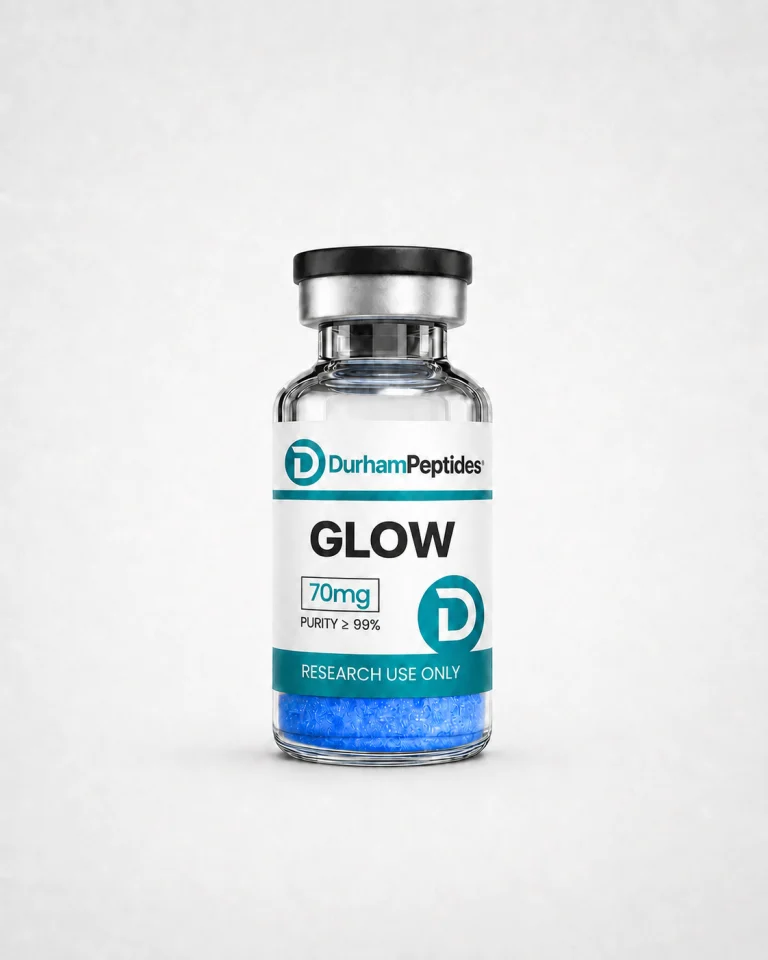


First peptide research order Canadian buyer's guide Durham Peptides
Placing a first research peptide order is one of the more uncertainty-loaded experiences in Canadian research peptide buying. Researchers entering the field for the first time face a sequence of unfamiliar decisions — which supplier, which products, what payment method, what to expect during delivery, what to do when the package arrives. Each step has reasonable answers, but assembling them into a complete picture takes effort that many guides don't provide.
This guide walks through the complete first-order experience from start to finish: how to evaluate suppliers, choose your first peptide, navigate the ordering process, manage payment and delivery, and properly handle the peptides on arrival. The framing throughout is practical: what to actually do, in what order, and what to expect along the way.
For broader buyer framework coverage, see How to Buy Peptides in Canada: A Complete Guide for 2026.
Step 1: Understand the Regulatory Framework
Before placing any order, understand the basic framework: research peptides in Canada are sold for laboratory and research applications under research-use-only framing. They are not approved by Health Canada for human or veterinary therapeutic use. Reputable Canadian suppliers maintain consistent research-use-only language throughout their content and product labeling.
This isn't legal hedging — it's the regulatory category. Understanding the framework prevents misaligned expectations (research peptide suppliers don't provide therapeutic guidance) and ensures you evaluate suppliers within the appropriate context.
For complete coverage of the Canadian regulatory framework, see Are Peptides Legal in Canada? A Complete Guide to Research Peptide Laws.
Step 2: Evaluate Potential Suppliers
The supplier evaluation step is the most consequential decision in the entire first-order process. Apply the standard six-criteria framework:
1. Verifiable third-party COA via Janoshik Analytical. The Certificate of Analysis should be publicly accessible (not "available on request"), should be from Janoshik specifically, and should include a verifiable unique key. Take 60 seconds to verify a COA at janoshik.com/verify before ordering.
2. ≥99% HPLC purity. The research-grade purity standard. Anything below isn't research-grade.
3. Mass spectrometry identity confirmation. The COA should show molecular weight matching the labeled compound's expected value.
4. Solid-Phase Peptide Synthesis (SPPS) manufacturing. The modern manufacturing standard with synthetic amino acids. No animal-derived materials.
5. Canadian-domestic supply. Eliminates customs uncertainty, currency conversion, and shipping delays. Shipping originates from Canada with same-day dispatch typical.
6. Research-use-only framing. Consistent across the supplier's content, product pages, marketing, and customer communications.
For deeper coverage of supplier evaluation, see 5 Things to Look for in a Canadian Peptide Supplier and Peptides for Sale in Canada: A Researcher's Supplier Directory.
For verification methodology specifically, see How to Verify Peptide Quality: COAs, Third-Party Testing & What to Look For and How to Verify a Janoshik Test Report Unique Key.
Step 3: Choose Your First Peptide
The right "first peptide" depends entirely on the research question. Some common starting points:
For tissue-repair research: BPC-157 is the most-discussed research peptide in the Canadian market with substantial published preclinical literature. See What Is BPC-157? Why It's Canada's Most Popular Research Peptide.
For combined recovery research: The Wolverine Stack (BPC-157 + TB-500) is the most-searched peptide combination, engaging two complementary mechanisms in one vial. See The Wolverine Stack Explained.
For metabolic research: Semaglutide is the foundational compound in the incretin peptide research category. See What Is Semaglutide?.
For anti-aging research: GHK-Cu has the largest published research base in the anti-aging peptide category. See GHK-Cu: The Anti-Aging Copper Peptide.
For longevity research: MOTS-c is the mitochondrial-derived peptide with growing research interest. See What Is MOTS-c?.
For the complete catalog overview, see Durham Peptides Catalog 2026: Complete Product Overview and Best Peptides for Recovery Research.
Don't forget bacteriostatic water. Every peptide order needs bacteriostatic water for reconstitution. Most first-time buyers underestimate how much they'll use — a 10mL vial reconstitutes multiple peptides.
Step 4: Calculate Reconstitution Math (Before Ordering)
A common mistake: ordering a peptide and only thinking about reconstitution math after it arrives. Better practice: walk through the math before ordering, so you know exactly what concentration you'll have and how many research-units the vial will provide.
Use the Durham Peptides peptide calculator or follow the framework in Peptide Reconstitution Calculator Guide. The math determines:
- Volume of bacteriostatic water needed
- Final concentration (mg/mL)
- Research-unit math per syringe draw
- Total research sessions per vial
This math also helps decide whether a smaller (5-10mg) or larger (50mg) vial is right for your research timeline.
Step 5: Place the Order
Most Canadian-domestic peptide suppliers have straightforward online ordering processes:
- Browse the catalog and add products to cart
- Review the order summary
- Enter shipping address (Canadian residential or business address)
- Choose payment method (varies by supplier)
- Confirm and submit
Common payment methods on Canadian peptide sites:
Interac e-Transfer. The most common Canadian payment method. Direct bank-to-bank transfer with no card processing fees. Typically requires sending the e-Transfer to a designated email after order confirmation.
Credit/Debit cards. Some suppliers process card payments through processors like Square. Standard online checkout flow.
Cryptocurrency. Some suppliers accept Bitcoin or other cryptocurrencies. Less common but available at some suppliers.
The payment method options at each supplier are typically listed at checkout. Confirm the payment method matches your preference before completing the order.
Step 6: Order Confirmation and Tracking
After payment, expect:
- Order confirmation email within minutes (sometimes immediate)
- Shipping confirmation email within hours of dispatch (same-day dispatch typical for Canadian-domestic suppliers during business hours)
- Tracking number included in the shipping confirmation
- Real-time tracking updates from carrier (typically Canada Post Xpresspost) as the package moves
For complete coverage of the shipping experience, see Peptide Shipping in Canada: What to Expect with Your Research Peptide Order.
Step 7: Delivery Day
When the package arrives:
Be available for signature. Canada Post Xpresspost typically requires signature on delivery. If you can't be home, plan ahead — direct shipment to a workplace, use Canada Post FlexDelivery, or pick up at a Canada Post location after a missed delivery.
Inspect packaging on arrival. Brief visual check for any obvious damage. Most legitimate suppliers package adequately for shipping handling.
Verify contents. Confirm all expected items are included, quantities match the order, and labels are intact.
Inspect vials. Lyophilized peptides should appear as uniform white powder. Brief visual check for any abnormalities. See Common Peptide Research Mistakes for more on what to look for.
Step 8: Post-Receipt Storage
Move peptides promptly to appropriate storage:
Lyophilized vials. Refrigerated (2-8°C) for moderate-term storage; frozen (-20°C) for long-term storage. Use the main refrigerator compartment, not the door (which has greater temperature variation).
Bacteriostatic water. Refrigerated storage. Keep sealed until ready to use.
Documentation. Record the receipt date, batch numbers, and any observations.
For complete coverage, see Peptide Storage & Shelf Life: How to Store BPC-157 and Other Research Peptides.
Step 9: Reconstitution When Ready to Begin Research
When ready to start research, follow the standard reconstitution protocol:
- Allow the lyophilized vial to reach room temperature
- Reconstitute with the calculated volume of bacteriostatic water
- Gently swirl (don't shake) until fully dissolved
- Label the vial with the reconstitution date
- Return to refrigerated storage
- Use within approximately 28 days
For complete coverage, see How to Reconstitute Peptides: A Step-by-Step Guide for Researchers and What Is Bacteriostatic Water? Why Every Peptide Requires It.
Step 10: Document Everything
Disciplined documentation makes research consistent and helps identify any issues:
- Order confirmation, batch numbers, COA verification
- Receipt date, packaging condition, vial appearance
- Reconstitution date, volume used, final concentration
- Research session details — date, observations, any deviations from protocol
Most experienced researchers maintain a research notebook or spreadsheet covering these details. The investment of a few minutes per session prevents many problems down the line.
Common First-Order Mistakes to Avoid
Several patterns trip up first-time buyers:
1. Choosing supplier on price alone. The most common mistake. Apply the six-criteria framework regardless of price.
2. Ordering too many peptides at once. Better to start with one or two peptides and a 10mL bacteriostatic water vial. Expand once you understand the workflow.
3. Skipping COA verification. The Janoshik unique key check takes 60 seconds and is the single most valuable quality verification step.
4. Underestimating bacteriostatic water needs. Every peptide vial requires bacteriostatic water for reconstitution. Order it with your peptides.
5. Not planning for signature delivery. Canada Post requires signatures. Plan around your availability or use FlexDelivery.
6. Forgetting reconstitution math until peptides arrive. Calculate before ordering — it informs vial size choice and prepares you for reconstitution day.
For complete coverage of common mistakes, see Common Peptide Research Mistakes.
Frequently Asked Questions
How long does my first peptide order take? Same-day dispatch with 1-3 business days delivery to most Canadian destinations. From order placement to peptides in hand: typically 2-5 calendar days for major metropolitan areas.
Do I need any prior research experience? The basic processes (reconstitution, storage, documentation) are straightforward. The Durham Peptides educational content covers the foundational concepts. New researchers can start with educational reading and grow into more sophisticated research over time.
What's a good first peptide to try? Depends on your research question. BPC-157 is the most-discussed in Canadian research. Wolverine Stack offers two complementary mechanisms in one vial. Don't forget bacteriostatic water.
How much should I budget for a first order? Varies by peptide and quantity. Budget for at least one peptide vial, one bacteriostatic water vial, and shipping. The total typically falls in a manageable range for one peptide trial. See Peptide Pricing in Canada.
Do I need special equipment? For reconstitution: bacteriostatic water (orderable from the same supplier) and standard handling. The peptide calculator helps with math. Beyond reconstitution itself, equipment depends on your specific research protocol.
What if I'm nervous about the first order? Reasonable. The standard six-criteria framework prevents the major problems. Verify the Janoshik COA before ordering, choose Canadian-domestic supply, start with a single small order to learn the process, and grow from there.
What payment methods are typically accepted? Interac e-Transfer is the most common. Some suppliers accept credit/debit cards or cryptocurrency. Specific options vary by supplier — listed at checkout.
Will my order be delivered discreetly? Yes — Canadian-domestic peptide shipping uses discrete packaging that doesn't reveal contents or supplier identity from the exterior.
Can I track my order? Yes — Canadian-domestic peptide shipping includes tracking numbers from Canada Post or equivalent carriers with real-time updates.
What if something goes wrong with my order? Contact the supplier with the order number and details. Reputable Canadian-domestic suppliers handle shipping issues responsively. Document any issues with photos before opening packages if applicable.
How long do peptides last after I receive them? Lyophilized form: ~12-18 months refrigerated, ~24+ months frozen. Reconstituted form: ~28 days refrigerated. See Peptide Storage & Shelf Life.
Should I order more than one peptide for my first order? Either approach works. Single-peptide first orders are simpler — fewer variables to manage, easier to learn the workflow. Multi-peptide first orders work for researchers comfortable with the basic processes. Combinations like the Wolverine Stack or GLOW Blend offer multi-peptide research in a single vial.
Final Thoughts
The first peptide research order doesn't have to be uncertainty-loaded. The Canadian-domestic peptide market is mature in 2026, with established quality standards, reliable shipping infrastructure, and well-developed educational resources. Following the standard framework — supplier evaluation, COA verification, reconstitution planning, proper storage, and documentation — produces a clean first-order experience.
For Canadian researchers placing a first order, the practical sequence:
- Verify the supplier through Janoshik COA verification
- Choose your first peptide based on the research question
- Order with bacteriostatic water
- Calculate reconstitution math before delivery
- Receive, store, document
- Reconstitute when ready and begin research
Each step has clear answers, the resources to support each step exist, and the typical Canadian-domestic experience is reliable.
For continued reading, see How to Buy Peptides in Canada: A Complete Guide for 2026, How to Verify Peptide Quality, Common Peptide Research Mistakes, Peptide Shipping in Canada, Best Peptides for Recovery Research, and The Complete Peptide Glossary.
Browse the complete Durham Peptides catalog at durhampeptides.ca/category/all-products. View all Janoshik-verified COAs at durhampeptides.ca/lab-results.
Selected References
- Lau JL, Dunn MK. Therapeutic Peptides: Historical Perspectives, Current Development Trends, and Future Directions. Bioorganic & Medicinal Chemistry. 2018;26(10):2700-2707. https://pubmed.ncbi.nlm.nih.gov/28720325/
- Government of Canada. Food and Drugs Act (R.S.C., 1985, c. F-27). Statutory framework governing pharmaceutical products in Canada.
- Manning MC, Chou DK, Murphy BM, Payne RW, Katayama DS. Stability of Protein Pharmaceuticals: An Update. Pharmaceutical Research. 2010;27(4):544-575. https://pubmed.ncbi.nlm.nih.gov/20143256/
- United States Pharmacopeia. USP General Chapter <797>: Pharmaceutical Compounding — Sterile Preparations. Standards on sterile handling.
- Canada Post. Xpresspost Service Standards. Canadian-domestic express shipping service standards.
- Health Canada. Drugs and Health Products: Regulatory Information for Drugs. Federal regulatory guidance on Canadian drug categories.
All products sold by Durham Peptides are for research and laboratory use only. They are not intended for human or animal consumption, diagnosis, treatment, cure, or prevention of any disease. This article is informational and does not constitute medical advice.