

NAD+ mitochondrial research oxidative phosphorylation bioenergetics longevity Durham Peptides Canada
NAD+'s longevity research thread is often centered on sirtuins — the NAD+-dependent enzyme family central to cellular aging biology. But sirtuins are only part of NAD+'s biological story, and arguably not even the most fundamental part. The more biologically foundational NAD+ research thread involves mitochondrial biology — the central organelle where NAD+ does its primary metabolic work as the electron carrier in oxidative phosphorylation. This article focuses on that mitochondrial research thread, distinct from
the sirtuin-focused longevity coverage in NAD+ and Sirtuins.
For the standalone NAD+ overview, see What Is NAD+?; for the sirtuin angle, see NAD+ and Sirtuins; for the broader longevity peptide landscape, see The Best Longevity Peptides for Research in Canada. Nothing here is medical, dosing, or therapeutic guidance.
The Mitochondrion: NAD+'s Primary Workplace
To understand why mitochondrial research is the foundational NAD+ research thread, you need to understand where NAD+ does most of its work biologically.
Mitochondria are the cell's primary energy production organelles. They generate ATP through oxidative phosphorylation — the process that combines substrates from glucose, fatty acid, and amino acid metabolism with oxygen to produce cellular energy. This process accounts for the vast majority of ATP produced in most cell types.
Oxidative phosphorylation requires electron carriers. The process moves electrons from energy substrates through a series of protein complexes (the electron transport chain, ETC) in the inner mitochondrial membrane, with oxygen as the terminal electron acceptor. The energy released drives ATP synthesis.
NAD+ and NADH are the primary electron carriers. NAD+ accepts electrons from substrates being oxidized (becoming NADH), then donates them to the start of the electron transport chain (becoming NAD+ again). This NAD+/NADH cycling is the central electron shuttle of cellular energy metabolism.
This is the foundational point: NAD+ is, first and foremost, an electron carrier for
mitochondrial energy production.The sirtuin biology is a secondary use of NAD+; the primary biological role is bioenergetic.
The Mitochondrial NAD+ Pool
A research-design point worth understanding: NAD+ is not uniformly distributed across the cell. The cell maintains separate NAD+ pools in different compartments:
Compartment | NAD+ pool characteristics |
Cytoplasm | Substantial; used for glycolysis NAD+/NADH cycling, some sirtuin reactions (SIRT1, SIRT2 partly), cytoplasmic NAD+-dependent enzymes |
Mitochondria | Substantial; used for the electron transport chain, mitochondrial sirtuins (SIRT3, SIRT4, SIRT5), TCA cycle dehydrogenases, fatty acid oxidation |
Nucleus | Smaller; primarily for nuclear sirtuin reactions (SIRT1, SIRT6, SIRT7) and PARP activity |
Each pool has its own regulation, dynamics, and decline patterns with aging. The
mitochondrial NAD+ pool is particularly relevant for aging research because mitochondrial dysfunction is one of the recognized hallmarks of aging and mitochondrial NAD+ availability rate-limits both bioenergetic function and mitochondrial sirtuin (SIRT3) activity.
For the broader hallmarks of aging context, see the López-Otín 2013 Cell reference framework that organizes aging biology into recognized hallmarks.
Investigated NAD+ Effects on Mitochondrial Function
Published research has examined NAD+ supplementation effects across multiple mitochondrial biology endpoints:
Investigated effect 1: Mitochondrial respiratory function. Research has examined investigated effects on mitochondrial oxygen consumption (a direct measure of oxidative phosphorylation activity) in cell-culture and animal models. Aging is associated with declining mitochondrial respiration; NAD+ supplementation has been studied for restoration toward younger-pattern respiratory function.
Investigated effect 2: Mitochondrial biogenesis markers. Mitochondrial biogenesis — the production of new mitochondria — is regulated by transcription factors (PGC-1α and others) that interact with NAD+-dependent enzyme activity. Research has examined investigated effects on mitochondrial biogenesis markers including PGC-1α expression and mitochondrial DNA copy number.
Investigated effect 3: Mitochondrial quality control (mitophagy). Damaged mitochondria are removed through a specialized form of autophagy called mitophagy. Research has examined investigated NAD+ effects on mitophagy pathways, which are SIRT3-dependent in mitochondrial contexts.
Investigated effect 4: Mitochondrial protein deacetylation (SIRT3). SIRT3 is the major mitochondrial sirtuin, deacetylating many mitochondrial proteins including enzymes of the TCA cycle, oxidative phosphorylation machinery, and antioxidant defenses. Mitochondrial NAD+ availability directly affects SIRT3 activity. For the broader sirtuin connection, see NAD+ and Sirtuins.
Investigated effect 5: Oxidative stress and antioxidant defense. Mitochondria are major sources of reactive oxygen species (ROS) as a byproduct of oxidative phosphorylation. NAD+-dependent enzymes including SIRT3 regulate antioxidant defenses (SOD2 and others). Research has examined investigated NAD+ effects on oxidative stress markers and antioxidant capacity.
Investigated effect 6: Energy metabolism markers. Beyond the molecular endpoints, research has examined investigated NAD+ effects on broader energy metabolism — ATP levels, glucose handling, fatty acid oxidation — that depend on mitochondrial function.
Why NAD+ Decline Hits Mitochondria Especially Hard
A particularly relevant aging biology point: NAD+ decline with age affects mitochondria disproportionately because:
- Mitochondria are major NAD+ consumers through oxidative phosphorylation, TCA cycle reactions, and SIRT3 activity
- Mitochondrial NAD+ salvage is its own regulated process that can be impaired separately from cytoplasmic salvage
- NAD+ decline reduces SIRT3 activity, which compromises mitochondrial protein quality control and antioxidant defense
- Reduced antioxidant defense increases ROS damage to mitochondria themselves, creating a vicious cycle
- Damaged mitochondria produce less energy and more ROS, worsening the overall cellular energy state
This is why mitochondrial dysfunction in aging is often closely tied to NAD+ decline — the two are mechanistically interlinked at the level of basic mitochondrial biology.
The MOTS-c Connection
Worth a contextual point: MOTS-c is a mitochondrial-derived peptide that's also active in mitochondrial biology research, but through a different mechanism — AMPK activation rather than direct electron carrier biology. The two compounds engage mitochondrial biology from different angles:
- NAD+ is the actual electron carrier; supplementation engages the bioenergetic mechanism directly
- MOTS-c signals about mitochondrial state through AMPK; engages mitochondrial biology through signaling rather than substrate
Research designs examining mitochondrial biology may use both compounds — different mechanisms engaging different aspects of mitochondrial research. For the parallel MOTS-c thread, see MOTS-c and AMPK and MOTS-c for Exercise and Muscle Research.
Mitochondrial Research vs Sirtuin Research with NAD+
The two main NAD+ research threads compared:
Property | Mitochondrial research | Sirtuin research |
Primary endpoints | Respiratory function, mitochondrial biogenesis, ATP, mitochondrial DNA, antioxidant capacity | Sirtuin activity, downstream sirtuin substrate deacetylation, sirtuin-dependent gene expression |
Research models | Cell culture (Seahorse respirometry), animal models (mitochondrial function assays) | Cell culture (enzyme assays), animal models (sirtuin-dependent endpoint measures) |
Time horizons | Hours to weeks | Days to weeks (gene expression effects) |
Translation context | Bioenergetics, age-related mitochondrial decline, mitochondrial myopathies | Cellular aging, metabolic regulation, caloric restriction biology |
Foundational references | Verdin 2015 Science; broader mitochondrial biology literature | Imai & Guarente 2014; sirtuin research literature |
The two threads converge on multiple endpoints (SIRT3 is mitochondrial; mitochondrial biogenesis is partly PGC-1α/sirtuin dependent) but represent meaningfully different research design choices.
Where NAD+ Sits in the Mitochondrial Research Landscape
The broader mitochondrial research landscape includes a range of approaches:
Approach | Mechanism |
NAD+ (direct supplementation) | Substrate replacement; engages electron carrier biology directly |
NAD+ precursors (NMN, NR) | Indirect supplementation through different salvage pathway entry points |
MOTS-c | AMPK signaling; affects mitochondrial biology through signaling |
Mitochondrial-targeted antioxidants | Direct reactive oxygen species reduction |
Mitochondrial uncouplers | Direct effects on proton gradient |
Caloric restriction mimetics | Various mechanisms engaging mitochondrial response to energy state |
NAD+'s distinctive position is engaging the actual electron carrier biology rather than upstream signaling or downstream consequences. For research designed around bioenergetic mechanisms specifically, this directness is the relevant research-tool property.
Practical Research Considerations
Durham Peptides supplies NAD+ in two formats:
- NAD+ 500mg at C$114.99 (C$0.230/mg)
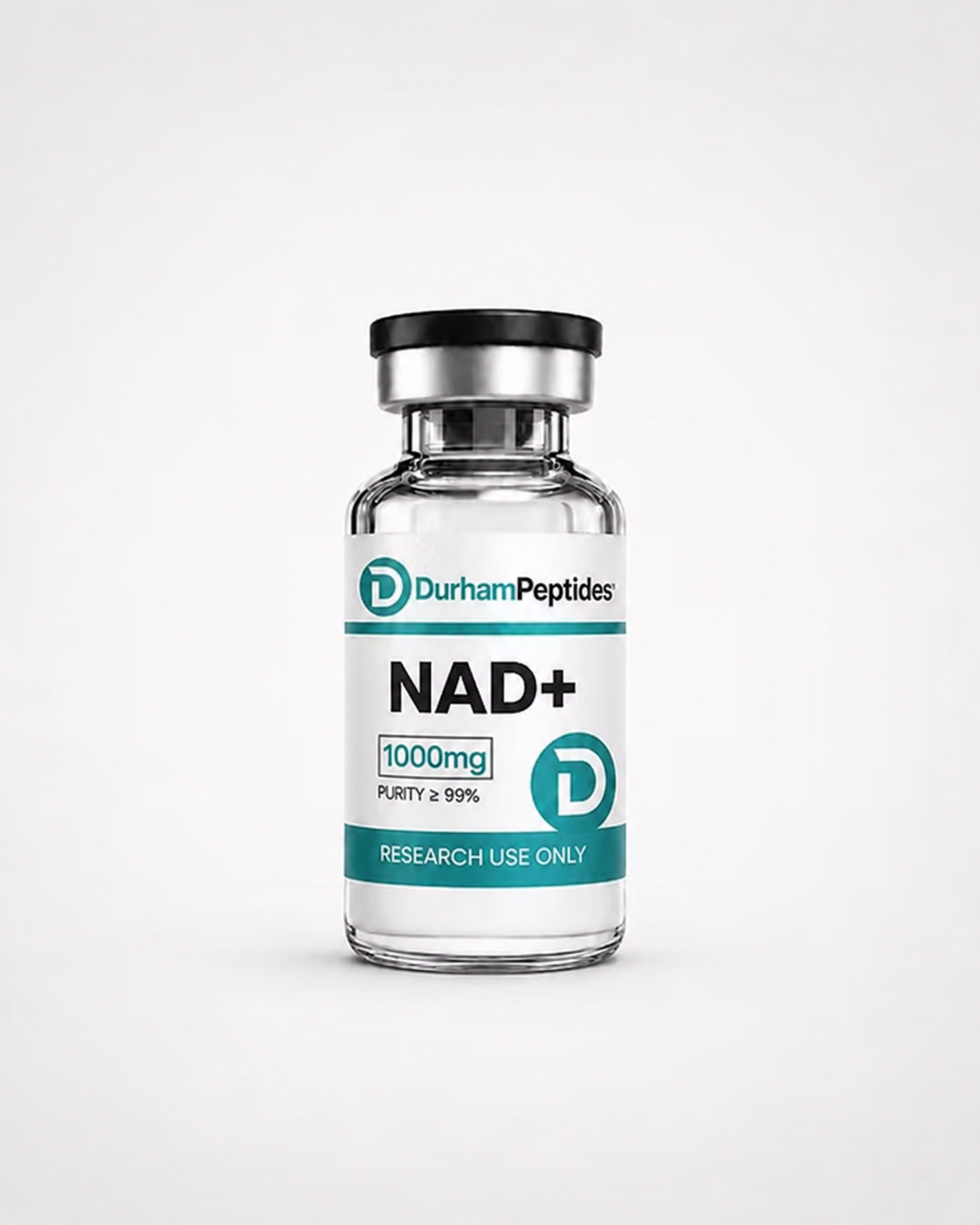
- NAD+ 1000mg at C$165.00 (C$0.165/mg)
For high-volume mitochondrial research, see NAD+ 500mg vs 1000mg and The NAD+ Research Budget. Both formats are Janoshik-verified to ≥99% purity with mass-spec identity, 100% synthetic.
For mitochondrial research combining NAD+ supplementation with mitochondrial-derived peptide research, see MOTS-c 10mg. For broader longevity research context, see The Best Longevity Peptides for Research in Canada.
Frequently Asked Questions
Is NAD+ mitochondrial research different from NAD+ longevity research? Related but distinct. Mitochondrial research focuses on bioenergetic endpoints — respiratory function, biogenesis, ATP, mitochondrial DNA — which are foundational to broader longevity biology. Longevity research often emphasizes sirtuin-mediated effects, which is a related but different research angle.
Why does NAD+ matter especially for mitochondria? Because NAD+ is the primary electron carrier in oxidative phosphorylation — the central energy production process that happens in mitochondria. NAD+'s electron-carrier role is its primary biological function, and most of that function happens in mitochondrial compartments.
Is the mitochondrial NAD+ pool separate from the cytoplasmic pool? Yes — the cell maintains separate NAD+ pools in mitochondria, cytoplasm, and nucleus, each with its own regulation and dynamics. The mitochondrial pool is particularly relevant for aging research because mitochondrial dysfunction is a recognized hallmark of aging.
How is the NAD+ mitochondrial research different from the MOTS-c mitochondrial research? NAD+ is the actual electron carrier — direct biology. MOTS-c signals about mitochondrial state through AMPK — signaling biology. Research designs may use both compounds engaging mitochondrial biology from different angles.
Why does mitochondrial NAD+ decline with age? Multiple factors: declining salvage capacity, increased consumption by chronic inflammation pathways, NNMT activity diverting nicotinamide, and broader metabolic dysregulation. The decline contributes to age-related mitochondrial dysfunction in a self-reinforcing pattern.
Where can I buy NAD+ in Canada? Durham Peptides supplies NAD+ 500mg (C$114.99) and NAD+ 1000mg(C$165.00), both Janoshik-verified.
Final Thoughts
NAD+'s mitochondrial research thread is the foundational research application — anchored in NAD+'s primary biological role as the electron carrier of oxidative phosphorylation, the central energy production process in mitochondrial biology. The mitochondrial NAD+ pool, its decline with aging, its connection to SIRT3 activity and mitochondrial quality control, and its role in the cellular energy economy together make mitochondrial research one of the most biologically fundamental NAD+ research applications. For researchers designing protocols around mitochondrial function, bioenergetics, or the mitochondrial dimensions of aging biology, NAD+ provides the research tool that engages the actual molecular biology at the heart of mitochondrial energy production.
For the standalone NAD+ overview, see What Is NAD+?; for the sirtuin research thread, see NAD+ and Sirtuins; for the parallel mitochondrial peptide research, see MOTS-c and AMPK; for the broader longevity peptide landscape, see The Best Longevity Peptides for Research in Canada.
Selected Research References
- Verdin E. NAD+ in Aging, Metabolism, and Neurodegeneration. Science. 2015;350(6265):1208-1213. https://pubmed.ncbi.nlm.nih.gov/25540137/
- Yoshino J, Baur JA, Imai SI. NAD+ Intermediates: The Biology and Therapeutic Potential of NMN and NR. Cell Metabolism. 2018;27(3):513-528. https://pubmed.ncbi.nlm.nih.gov/29211728/
- Covarrubias AJ, Perrone R, Grozio A, Verdin E. NAD+ Metabolism and Its Roles in Cellular Processes during Ageing. Nature Reviews Molecular Cell Biology. 2021;22(2):119-141. https://pubmed.ncbi.nlm.nih.gov/33353981/
- López-Otín C, Blasco MA, Partridge L, Serrano M, Kroemer G. The Hallmarks of Aging. Cell. 2013;153(6):1194-1217. https://pubmed.ncbi.nlm.nih.gov/23746838/
- Rajman L, Chwalek K, Sinclair DA. Therapeutic Potential of NAD-Boosting Molecules: The In Vivo Evidence. Cell Metabolism. 2018;27(3):529-547. (Reference on NAD+ mitochondrial effects in research models.)
All products sold by Durham Peptides are for research and laboratory use only. They are not intended for human or animal consumption, diagnosis, treatment, cure, or prevention of any disease.